
How to Build a Profitable Animal Fat Processing Plant?

Once you start putting real numbers on the fat, bones and offal leaving your line every day, “we should do something with it” quickly becomes a question. Rendered products already sit in a global market of roughly 23 billion USD in 2024 and are forecast to grow steadily on the back of feed, pet food, oleochemical and biofuel demand. In parallel, regulators in some major markets treat animal by-products as a controlled resource, just like the category 3 material is expected to go through approved processes such as rendering, pet food production, fertiliser or biofuel routes, or be destroyed under supervision, not just simply dumped as waste. 

On the floor the picture is much simpler. A substantial share of each carcass by weight never becomes retail meat; and it shows up as trimmings, internal organs, heads, feet, skins or frames. You either keep paying to move that material off site, or you treat it as feedstock for tallow, lard, poultry fat, fish oil and protein meals. I have sat in enough plant offices to know the tension here that you can see the potential value, but you also live with labour shortages, audits and local politics. The last thing you want is a rendering project that looks good in a consultant’s slide deck and then bleeds cash or fails inspections.

In the first part of this series I focused on the basics, but here I want to stay close to the decisions you have to make before concrete is poured or steel is ordered. How to read your own by-product streams and local markets honestly? How to size and choose rendering, pressing and refining equipment so it fits that reality instead of an idealised one? How to think about plant layout from intake to finished oil so food safety, odour control and wastewater are built in from day one? My aim is the same as when I work through a project with a GQ-Agri client, that is to move step by step from “we have by-products” to “we have a line that can live with real prices, real rules and real operating limits without wasting what the raw material can give us.”

How to Establish an Animal Fat Processing Plant?

When someone says they want a profitable animal fat plant, what they really need is a plant that fits three things at once, just like the by-products they can collect, the buyers they can honestly serve and the rules they must live under. If any one of those is off, even good equipment will struggle. Conduct thorough market research to establish a sound supply chain, including raw material sourcing, desired finished oil quality, and target markets. Configure appropriate equipment based on your business positioning. Different industries, such as food processing, daily chemicals, industrial applications, and biofuels, require different processing technologies and refining equipment for animal oils. Combine equipment planning with factory layout and environmental compliance to ensure the entire production process meets local regulations and customer certification standards.

Market research and raw material mapping.

Before you talk about rendering or refining equipment, you need a hard picture of supply and current costs, not just “we have a lot of waste”. I usually start with a simple matrix like this:

Source plantSpeciesBy-products (type)Avg t/dayPeak season or swingsCurrent handling cost / income per tDistance to plant km
Example APigFat trimmings, bones, offal12Higher Oct–Dec−40 USD/t disposal fee25

Once you fill this with your own data, something will become obvious. You see which streams really exist in volume, which ones already cost you money to remove, and which are close enough to move without killing the margin. Seasonality also comes into focus instead of being hidden behind a yearly average.

Then we map demand with the same step. List who within realistic trucking range already uses tallow, lard, poultry fat, fish oil or meals, note which grades they buy now and roughly what they paid over the last year, and record whether they can take steady volumes or only buy occasionally.

We are not trying to predict exact prices, just checking whether regional supply and regional demand can meet at a level that can carry operating and finance costs, instead of forcing you to dump fat and meal at the bottom of the market.

Process concept and equipment depth.

Once supply and demand look workable on paper, the next question is how far we need to process fat and solids. Rendering always has the same backbone, that is grinding, heating, separating fat and water, pressing, refining. What changes is how “finished” the oil must be when it leaves your site. And I like to sketch 3 bands before naming any specific machine:

Main marketsProduct gradesMinimum process chainExtra refining or control
Feed, pet food, basic technical useTechnical tallow, lard, poultry fat, MBM, poultry mealRendering line + basic filtrationMIU control, stable drying, simple QA
Biofuel and industrial oleochemLow-FFA tallow, selected category 3 animal fatsRendering + better separationTight FFA, water, impurity control
Edible and personal careEdible tallow, lard, cosmetic and soap base fatsRendering + full refining blockDegum, neutralise, bleach, deodorise

“Rendering line” here means the essentials, like the meat mincer for crushing, a closed vacuum rendering kettle with surround heating and automatic stirring, the condensate recovery system, an oil-residue separation scraper conveyor, a single screw oil press for the residue, crude oil storage tanks and a vibrating blade oil filter, together with some necessary pumps, conveyors or a control system.

  • If your first goal is to stop paying disposal fees and sell into feed, pet food coatings, simple soaps or local technical users, you stay in the first band. A compact line with the pre-breaker, vacuum rendering vessel, screw press, fat tanks and a simple vibrating leaf filter on the crude fat line is often enough. The test is simple if you can keep moisture and impurities in fat within your buyers’ ranges, and meal dry and stable so it does not heat up or spoil. If yes, a full refinery can wait.
  • If you see clear demand from biodiesel or renewable diesel plants or larger chemical buyers, you move toward the second band. They still buy animal fat, but they are very sensitive to free fatty acids, water and impurities. In practice that means stronger separation and tighter crude fat cleanliness, for example, optimising the conditions in the vacuum rendering and pressing stages and upgrading the polishing filter on the fat line, and then plus better tank heating and insulation and tighter process control so FFA does not creep up during storage or slow logistics.
  • If your core decision is edible tallow, lard for food processing or cosmetic and personal care bases, you are in the third band. Now a refining block sits on top of rendering. Degumming removes phospholipids, neutralisation brings FFA down, bleaching controls colour and some contaminants, deodorisation stabilises flavour and odour. Without the right heat-and-mass-transfer equipment and a sensible QA routine, you will not hold those needs, no matter how good the raw material looks.

When I work through this with a team, I write one plain sentence on a whiteboard that which two or three product grades should carry most of your revenue. “Technical tallow and MBM for feed” is useful. “We will sell everything to everyone” is not. Once that target mix is honest and specific, turning it into a concrete rendering line and, where needed, a refining block becomes an engineering job instead of just a shopping trip.

Capacity and line sizing.

Capacity is where many projects quietly go wrong. Too big and you carry fixed costs you cannot feed, but too small and you choke the plant as soon as volumes grow. And you already have the inputs to size the line, such as, daily and seasonal tonnages from your matrix; realistic working hours and maintenance windows; any local limits on night or weekend operation.
I prefer to sketch a base case with current by-products and honest working hours, and a growth case with tonnages you can reasonably reach in 3-5 years, and then can check both against the market assumptions so we do not build capacity that demand can never absorb.
For many new plants, it is safer to start with a vacuum rendering system and filtration train sized to that base case, and to leave clear space in the layout for adding further vessels or modules later, rather than committing to a single oversize line that only pays off if everything goes perfectly.

In many GQ-Agri projects, we can connect the vacuum rendering kettle as a module to the entire processing system. As production increases, capacity can be increased to target levels by adding additional rendering kettles and downstream unit components. This not only avoids wasted initial investment but also facilitates future growth.
For example, a Vietnamese customer initially had a daily capacity of 10 tons, equipped with two 5-ton vacuum rendering kettles. However, after a year of operation, the scale grew significantly, necessitating an upgrade to 20 tons. Then all that’s needed is to add two vacuum rendering kettles and adjust the existing feeding and condensation systems. There was no need to invest double the capital to build another production line.

Industrial Rendering Equipment – The Foundation of Profitable Operations.

Let me share what drives profitability in animal fat processing: integrated automation. Our rendering systems combine crushing, heating, vacuum boiling, and oil-residue separation into one seamless workflow. This integration eliminates bottlenecks, reduces labor costs, and maximizes extraction efficiency. Whether you’re processing poultry fat, lard, or tallow, scalable customization ensures your equipment matches your specific throughput requirements. I’ve seen operations double their margins simply by upgrading to properly sized rendering systems. Explore our customizable solutions designed for high-volume, cost-effective production.

Plant layout and flows.

Once you know what you want to produce and in what volumes, layout stops being a nice drawing and becomes a daily reality for operators. A workable animal fat plant keeps dirty and clean areas clearly separated and does not make raw material fight with finished fat and meal for the same corridor. And most good layouts follow a simple flow, such as

  • Raw material reception and coarse storage near the trucks, with fast unloading and simple, mostly one-way traffic
  • Rendering zone for grinding and cooking, with safe access and controlled ventilation
  • Fat separation, any refining stages and storage in a cleaner zone with tanks, pipework and heating matched to product mix and climate
  • Cooling or storage where traffic from raw reception cannot re-contaminate it
  • Finished fat and meal packing and load-out with clear routes of their own
  • Utilities and environmental systems (just like the boilers, condensers, odour control, wastewater treatment) in places where you can actually service and upgrade them

Good layout can save money every day. Flow lines are short, gravity helps where it can, and there is enough space to clean, sample and maintain equipment without shutting half the plant for a small repair. Many of the “technical” problems you see in older plants are really layout decisions coming back years later. That is also where a good equipment partner earns its keep, when a client comes to GQ-Agri with target capacities, product mix and available building or land area, we turn that into a practical layout and system design, so the line already reflects how people, trucks and product will actually move

Compliance, food safety and environmental control.

For animal fat plants, compliance and food safety belong inside the design from day one. If people want to sell into food and feed chains, they will need a HACCP plan and a food safety system aligned with standards such as the ISO 22000 or others.  

Even if they only target technical or fuel markets, buyers still expect traceability and control of contamination and of mixing between different risk categories. Fuel buyers will also care about fuel-relevant properties of your animal fat, especially acidity and any contaminants that could depress flash point or stability in their final biodiesel. Standards such as EN 14214 for biodiesel cap finished fuel acid values at about 0.5 mg KOH/g and require minimum flash points of at least around 101°C, and in some cases 120°C or higher, so the crude fat specifications they give you are usually set with those targets in mind.
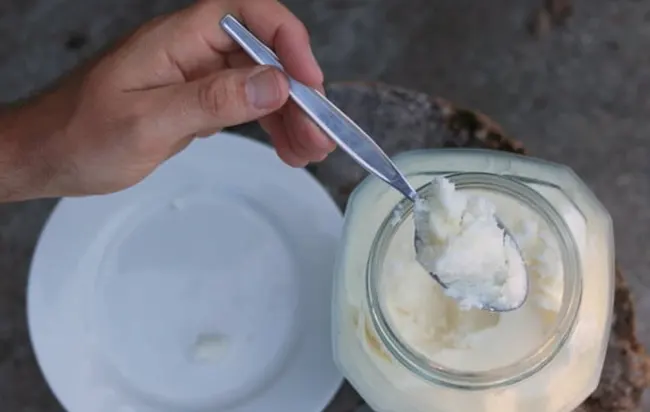
The finished product of extracted animal oil

National rules on animal by-products set conditions for how category 3 material can be collected, rendered, stored and transported when it is used in feed, pet food or fuel instead of being destroyed. Those rules define how the plant must work; they are not the afterthought.

As for the environment, rendering is one of the most effective ways to stabilise animal by-products and avoid emissions from rotting material, but that benefit only holds if odour, wastewater and residues are handled well. And that means enclosed or well covered processing, vapour condensation, odour treatment, fat skimming on the effluent line and safe handling of some solid residues. Planning for the stricter likely standard now usually costs less over the life of the plant than rushed retrofits and unplanned shutdowns when complaints or tighter rules arrive.

Operations and management.

The last piece is how you intend to run the line once the installers leave. A well designed plant will not run itself. From the start you should plan for training and simple measurement. Operators and maintenance staff need to understand not just which button to push, but why certain temperature profiles, residence times and separation steps matter for yield and quality. Written routines for start-up, shutdown, cleaning, sampling and record keeping give the plant a rhythm instead of a daily improvisation. Also, on the numbers side a very small set of clear indicators is usually enough, such as the yields for fat and meal, energy use per ton, unplanned downtime, blocked filters, customer complaints.

What Is the Difference Between Crude and Refined Animal Oils?

When people start planning an animal fat business, one of the first hard decisions is whether to stop at crude oil or build in refining. That single choice defines your commercial positioning, the margin you can realistically earn per ton and the kinds of buyers you can serve. If it stays vague, it is very easy to invest in equipment that is either too shallow for the specifications you offer or too deep for the prices your markets will ever pay, so I push this decision to the front of any design discussion.
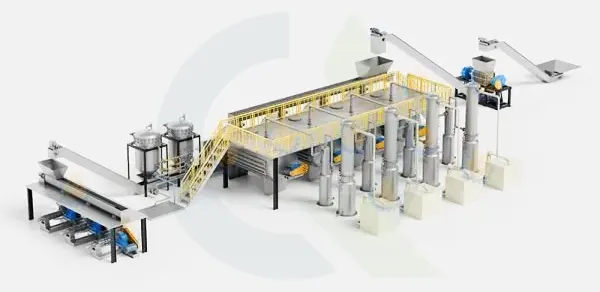
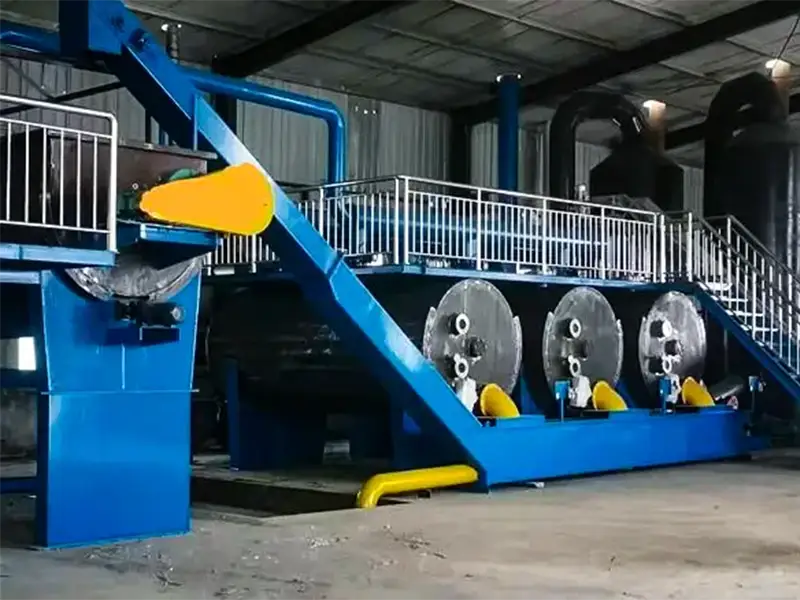
3D diagram of animal fat oil rendering equipment

Process Differences.

Crude animal oil is what you obtain directly from rendering plus basic impurity removal. Raw materials are first ground and crushed into relatively uniform small particles and then stirred and heated in a closed vacuum rendering kettle. The oil-residue mix leaving the kettle is then processed by a secondary screw pressing machine to recover additional fat. After that, the crude oil is allowed to settle, then screened or passed through simple filtration and stored in appropriate tanks as crude animal fat. If the rendering line is designed and operated well, this crude oil can be quite clean, but it still carries free fatty acids, some moisture, fine solids, natural pigments and strong odour compounds from both the raw material and the heating step.

Refined animal oil starts with that same crude stream and then passes it through an extra “polishing” step. And that means a controlled refining train with stages such as water degumming and dephosphorization, neutralisation/deacidification, washing and drying, decolorisation/bleaching, filtration and vacuum deodorisation, with the exact combination adjusted to your target markets.

For animal oils used in special applications, where wax content needs to be reduced or the fat kept liquid at room temperature, you may also add winterisation or fractionation to separate harder and softer fractions, but that is more about product design than basic viability.

Quality, Stability and Shelf life.

Those process choices show up very clearly once you start storing, shipping and using the oil. Crude animal oil tends to have higher and more variable free fatty acid levels, a darker and less predictable colour and a noticeable odour. If separation and filtration are basic, there is also a higher risk of residual moisture and fine solids that end up as sludge in tanks or deposits in customer equipment. Shelf life is shorter and more sensitive to temperature, air contact and tank handling, especially in warm climates or where tanks are frequently opened.

Refined animal oil is built to be more neutral and more stable. Free fatty acids are reduced into a narrow band, which slows oxidation and thermal breakdown. Colour becomes lighter and much more consistent between batches. Odour and flavour are greatly reduced(Odor reduction >90%), which is critical in food and personal care applications where the finished product must not smell or taste “animal”. With correct storage, refined oils keep their properties longer and behave more predictably in frying, emulsifying, saponification or blending processes.
When I explain this to teams, I always stress that crude oil is not automatically “bad”. For many feed mills, pet food coaters, basic soap makers and some fuel users, a well rendered, well filtered crude oil is exactly what they expect and are willing to pay for. The real trouble starts when a plant ships crude oil into applications that silently assume refined behaviour. At that point colour drift, rancid notes or unstable viscosity are not just technical issues, they are broken promises that hurt trust.

Markets and Value Differences.

From a commercial side, crude and refined animal oils do not compete on the same field, even when they come from the same species and the same plant.

  • Crude animal oils from oil refining lines are primarily used in food processing and high-end pet food coatings for personal care products. These products have high requirements for stability and palatability, but allow for moderate color and odor within limited limits. Crude animal oils are only used in some technical applications, specific biofuel production, or low-end animal feed; these routes either tolerate higher free fatty acid content.
  • Refined animal oils are the ticket to tighter and often higher value markets. For example, the food processors need fats with neutral taste, controlled colour and stable behaviour under heat, while working under stricter labelling and audit regimes. Personal care and cosmetic manufacturers are even more demanding on odour, colour and skin feel; a strong animal note simply kills a formulation. Higher grade oleochemical uses and some advanced biofuel processes also specify narrow limits for acidity, impurities and trace components that only refined streams can reliably meet. So, refining always adds capital cost, operating cost and day-to-day complexity.

For that reason, GQ-Agri designs refining schemes around each client’s commercial positioning, from simple polishing stages on crude fat, including options such as integrating a vibrating leaf filter to lift cleanliness for feed and technical uses, through to full multi-step refining blocks for food, personal care or higher-end oleochemical grades, so those plants can earn better prices and win more reliable customers at the level they choose to play.

Animal Oil Refining Equipment – Transform Crude into Premium Value

Here’s where the real profit margin expansion happens. Refining crude animal oil through degumming, deacidification, bleaching, deodorization, and polishing elevates your product from industrial-grade to food-grade certification. This quality leap unlocks premium markets and significantly higher selling prices. Our complete refining systems are engineered to meet strict food safety standards while maintaining operational efficiency. The investment pays for itself through premium pricing and expanded market access. Discover how our refining solutions can help you capture the high-value segment of the animal fat market.

Challenges and Solutions in the Animal Fat Rendering Processing Industry.

Once you are clear about crude versus refined products and have a rough plant concept, reality still pushes back, such as the technical limits on yield and energy, a market that keeps shifting and regulatory pressure on emissions and food safety.

Technical and Process Challenges.

On the technical side, most plants circle around the same three questions. Can we get as much oil as possible out of each ton of by-product without burning it? Can we keep acid value and colour under control when raw material quality swings? Can we avoid wasting steam and power in a process that needs a lot of heat by nature? You see the impact of weak answers on a tired line, just like raw material arrives warm and messy, vacuum rendering kettles have uneven temperature control so some pockets are overcooked while others are under-processed, separation equipment is undersized or badly arranged so fine solids follow the oil into storage and settle as sludge, condensers and vapour handling are vague so operators “vent” the building and lose energy and odour control at the same time.
A well-engineered line starts with pre-breaking and feed systems that give predictable particle size and flow instead of random chunks. In GQ-Agri systems that stability then carries into the cooking stage, automated feeding into a closed vacuum rendering vessel with heated inner and outer walls and a heated main shaft, together with scraper agitators, keeps the temperature and residence time under control, shortens cooking time and avoids wasting energy or driving unnecessary oxidation and acid value increase. After refining, a scraper conveyor separates the liquid oil from the solid residue, and then a single screw press processes the solid residue to recover the remaining oil. A vane filter is installed at the end of the crude oil pipeline to remove fine particles from the liquid oil, making it easier to market and preventing overloading of subsequent refining processes. Heat recovery is built into the flow where it makes sense, so hot streams preheat colder ones instead of being dumped. When I look at some GQ-Agri projects, the most robust plants are usually the ones where we were asked to balance all these points together, not just bolt a new “hero machine” onto an old layout.

Market and Supply Challenges.

Even if the line itself runs well, the outside world does not sit still. Rendering lives on by-products, and by-products move with slaughter volumes, export flows and consumer preferences. One year pork may be abundant and poultry tight; another year poultry offal floods the region while beef remains rare and expensive. Before establishing an animal oil processing plant, we need to ensure a continuous, stable, and qualified supplier of animal by-products. 

At the same time, end markets for animal fats keep changing. Biodiesel and renewable diesel plants change their feedstock mix when prices or policy signals move. Feed formulators reformulate when vegetable oil prices change. Downstream businesses may switch between various raw materials such as tallow, lard, camel hump, or fish oil based on global price fluctuations and customer demand.
If a plant has been designed around a single raw material and a single buyer, those changes hit hard. Volumes can drop below the point where a large continuous line is economic. A key buyer may suddenly demand a tighter specification or a different grade that the current setup cannot reach without major changes.

The way out is controlled flexibility, not “do everything for everyone”. On the supply side, this means finding multiple raw material sources as much as possible so that the plant can process raw materials from different sources, ensuring the rendering system can operate normally even during the off-season of a particular supplier. In terms of products, this means choosing a process that can produce at least 2-3 different grades of products, such as stable technical tallow and cleaner products with lower free fatty acid content for fuel or other users with higher requirements. In practice, I often recommend starting with a solid rendering backbone that serves technical and basic fuel markets from day one, and leaving clear tie-in points for an additional refining plan once long-term contracts for refined oil are in hand. And from a market side, GQ-Agri’s role is not only to supply equipment but to check with the client whether process depth matches the markets they can realistically reach.

Regulatory, Environmental and Food Safety Challenges.

The third frame is regulation, and in rendering it is never optional. In the EU, for example, animal by-product rules under Regulation (EC) No 1069/2009 and its implementing acts classify material into three risk categories and require rendering plants that handle category 3 by-products for feed, pet food or fuel uses to be approved or registered by the competent authority before they operate. Environmental permits then translate those principles into numbers. Recent BAT guidance for slaughterhouses and animal by-products installations in Europe cites indicative associated emission levels for wastewater after on-site treatment in the order of around COD 25-125 mg/l, BOD₅ 10-40 mg/l and the suspended solids 5-60 mg/l. In many North American municipal pretreatment programmes, local discharge limits for fats, oils and grease into sewers commonly sit around 100 mg/l, with some ordinances using values between roughly 100 and 300-325 mg/l depending on plant conditions. Food and feed safety standards add another layer on traceability, contamination control and documentation; in practice that means HACCP-based systems aligned with schemes such as ISO 22000 or recognised feed safety codes, plus full compliance with national implementation of the animal by-product rules if you want to supply edible tallow or feed fat into audited chains.
Plants that treat these topics as paperwork to be solved at the end of a project usually pay twice. First they pay for a line that is hard to operate within the rules, then they pay again for retrofits and emergency fixes when inspectors or neighbours push back. Typical pain points include odour control systems that are too small for peak vapour loads, wastewater pre-treatment that was never designed for real oil and solids content, and layouts that make it almost impossible to prevent cross-contamination between different animal categories or between dirty and clean zones.

A more realistic way is to let the rules shape the process instead of fighting them. That means designing vacuum rendering kettles, presses and refinings so they can reliably hit the required time-temperature profiles, choosing closed or well-covered conveying where odour and hygiene matter, and integrating vapour condensation and odour treatment from the start rather than as an afterthought. In terms of wastewater treatment, this means reserving 20-30% of space and equipment for grease skimming, solids removal, and homogenization before discharge into a central treatment plant. For food and feed applications, it also means building traceability into the control philosophy so batches and categories can be followed and documented without creating chaos for operators.

An animal fat business stands on a few concrete choices, not on a warehouse. You need a clear view of the by-products you can really collect, the grades your buyers will reliably pay for and where you want to sit on the crude-to-refined spectrum. Once those pieces are honest, the rest of the design follows that a rendering backbone that protects yield and quality, enough flexibility to move between a couple of product grades, and a layout and utility package that can actually live with your local rules on odour, wastewater and food or feed safety.

Where GQ-Agri fits in is taking that picture and turning it into a line you can operate every day. We do not just match tonnage to a rendering system size; and we put your raw material, markets and regulations on the same table and build a process that fits inside them. That is usually the point where the project stops feeling vague and starts to look like a business you can explain, run and grow.

Have questions about starting an animal fat processing business?

Our team will provide a one-stop service, from identifying needs and planning your business strategy to custom equipment production and on-site installation and commissioning, to help you begin your profitable journey.

FAQ

It is suitable if you have steady by-products and real local buyers.
List all slaughterhouses/processors within trucking distance with their daily by-product tonnage, then list potential buyers (just like the feed, fuel, soap, oleochem) with realistic demand; if both tables look stable for several years, the location is a serious choice.

Most projects should start with crude only and prepare for refining later.
If your current buyers are mainly feed mills, pet food and basic soap producers, a well-controlled crude line is normally enough; you add a refining block only when you have written specs and long-term demand that clearly pays for the extra steps.

This is the tonnage you can stably supply under normal circumstances, not an estimate for peak or ideal conditions. Our current equipment covers standard designs of about 5-30 tons per day, and larger-scale lines can be customised based on your plant space or the production requirements.
You can use real supply data and seasonal lows to calculate a realistic daily throughput, and size the initial line around that number. Because our equipment is modularly designed, additional machines can be added to the existing system as volumes grow, giving you flexibility for normal capacity increases.

You should invest enough for them to be core part, not afterthoughts.
Budget for proper condensers, odour treatment, fat skimming, solids removal and an equalisation tank; under-designed systems usually lead to neighbour complaints, regulatory pressure and retrofits that cost more than doing it right in the initial layout.

The ones your target buyers and local authorities explicitly need. Edible and feed markets usually need a HACCP-based system, recognised food or feed safety schemes and full compliance with animal by-product rules, while technical and fuel markets still expect basic traceability and category control even if formal certification is lighter.

en_USEnglish