Hubungi Kami Sekarang

I often see posts online asking: How to Start a Successful Oil Mill? We’ve had similar questions from our clients. But there’s never just one answer. I have witnessed some of my clients develop this simple idea into a thriving business, while I have also witnessed others fail and leave the market due to insufficient initial planning. Before starting a small oil mill, we need to clarify several questions: Why start an Edible Oil Pressing Business? What business opportunities lie behind this? How should we proceed at different stages of starting a successful oil mill? Are there any essential factors to we need to consider? How Much Investment is Required to Open an Oil Mill and so on. Are you still feel confused? Based on my years of experience dealing with clients, I will share with you in detail how to start a successful oil mill. Additionally, I’ll provide some professional insights into machine selection for your oil mill business. I hope this will help you.
Why Start an Edible Oil Pressing Business?
The global cooking oil market size was estimated at USD 171,938.3 million in 2023 and is projected to reach USD 253,750.0 million by 2030, growing at a CAGR of 5.8% from 2024 to 2030. These data clearly demonstrate the significant growth potential of the global oil pressing business. The potential for high profits all can through value-added products and byproducts, as well as opportunities in emerging markets, are continuously increasing for edible oil pressing companies. Given the diverse revenue streams generated from edible oil byproducts, the benefits of opening an oil pressing workshop are self-evident.
With strong statistical data supporting the oil pressing industry from big data, many companies are eager to develop edible oil production lines. So, what should companies pay attention to when launching this business? I will elaborate on the following points that are of most concern to businesses.
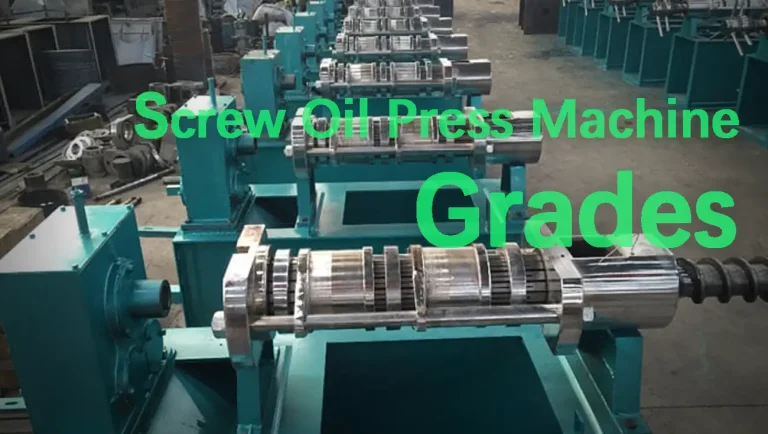
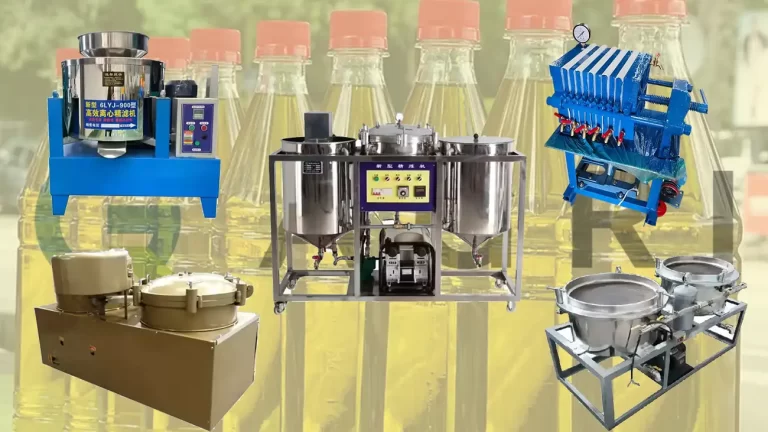
- Low Investment. When starting a new business line, many businesses ask: How much investment do I need to start this business? The truth is, the investment for opening an oil pressing workshop is very low. Typically, an oil pressing workshop only needs to configure a few pieces of equipment, such as a multi-functional screw press, a hydraulic oil press, an oil filter, some stainless steel oil tanks, and some raw materials, according to the business route and process to start operating. It’s that simple.
- Wide Customer Base. This is another benefit of opening an oil pressing workshop. This key point effectively solves a crucial problem faced by most business models in their early stages: Do I have customer resources? What is my customer base like? In the context of discussing an oil pressing workshop business, this question is completely unnecessary. As far as we all know, cooking oil is a necessity in every household kitchen and an indispensable part of people’s lives. Cooking oil is essential behind every delicious meal. Furthermore, as consumers increasingly value health and nutrition in now society, a small-scale oil mill can produce oils with specific health benefits to meet people’s needs.
- Low Barrier to Entry. Starting an oil pressing plant doesn’t require much specialized skill; you just need to know how to operate an mesin pengepres minyak. Moreover, with continuous oil pressing equipment updates and iterations, many oil press machines now have very simple operating procedures and are easy to learn. For example, GQ-Agri has many machines with fully mechanized designs; this type of machine, used in small oil mill production lines, only requires 2-3 workers to operate.
- Profitability is strong. A small-scale oil mill by simplifing its production process, improving operational efficiency, and implementing cost-effective measures.Additionaly,when you eatabilsh a small oil mill,meaning that residents within a radius of tens of kilometers are likely to become your stable customer base.
What are the three main profit models for an edible oil pressing business?
I’ve seen too many clients hesitate because they’re unsure if oil pressing production is profitable. Are you also hesitant because you’re confused about how to make this business line profitable? In recent years, I have visited many clients in this industry. By collecting their business models and information, I have summarized the following main profit models.

Self-Production and Self-Sales: The Most Intuitive and Easiest Model to Start
Self-production and self-sales is the most common and easily understood business model in the edible oil pressing industry. Many of our clients, as oil press entrepreneurs, typically purchase raw materials such as peanuts, rapeseed, and sunflower seeds, and use oil presses to extract corresponding types of edible oil: peanut oil, rapeseed oil, sunflower seed oil, etc. The oil is then bottled, labeled, and sold to nearby small supermarkets or residents. The core advantage of this model is its direct cash flow and fast payment collection. Customers have a natural trust in “freshly pressed, visible, and transparent raw materials,” thus successfully accumulating their first batch of loyal customers.
However, many people overlook one point: self-production and self-sales is not the “selling point,” but rather the “entry point.” Once the product is stable, medium-sized enterprises will further upgrade on this basis: by improving oil quality and unifying packaging and brand image, they can successfully upgrade from “selling oil to the surrounding area” to “regional supply.” As customer demand expands, the subsequent transformation of our business model becomes obvious.
Processing with Supplied Raw Materials:
This business model typically involves customers delivering raw materials to an oil mill for pressing, with the mill charging a small processing fee. The appeal of this model lies in the fact that businesses don’t need to stockpile raw materials, significantly increasing equipment utilization. In many regions, this is a business built on trust; farmers and consumers are more willing to pay for a “visible processing process.” Therefore, there is virtually no market risk, and income is relatively stable and predictable.
It’s important to note that for medium to large-sized enterprises, this model often doesn’t operate in isolation. It serves as a supplement during off-seasons, increasing the annual operating rate of equipment and accumulating real market feedback on raw material quality and pressing processes. Smart operators don’t just calculate “how much processing fee they earned,” but rather “what these customers can bring in the future.”
Raw Material + Service Combination: Multiple Revenue Streams
In many cities, consumers lack the means to grow or reliably obtain oilseeds, but they strongly desire “authentic fresh-pressed oil.” At this point, oil mills can offer raw material purchasing services. They can buy raw materials at low prices and then sell them to consumers at slightly higher prices, while also providing free oil pressing services. Furthermore, the oil cake left over after customers’ pressing can be sold to producers at a lower price, thus increasing revenue.
In this way, three revenue streams are generated simultaneously in a single transaction: profit from the raw material price difference, customer loyalty from the oil pressing service, and revenue from the sale of by-products (oil cake). This is why many oil mills, even those that appear small in scale, actually have profitability far exceeding expectations.
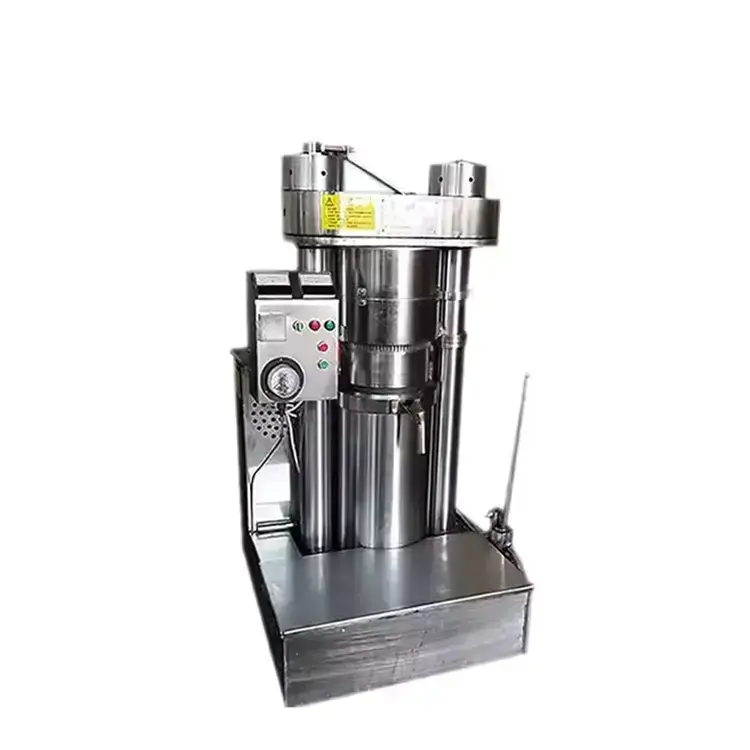
Mesin Press Oli Hidrolik:
Mesin ini mengandalkan tekanan statis cair, semacam pegangan yang kuat dan tak kenal lelah untuk menyelesaikan pekerjaan. Mesin ini sangat bagus saat bekerja dengan biji-bijian yang kaya minyak seperti wijen, kenari, atau zaitun. Yang paling saya hargai adalah bagaimana mesin ini menjaga suhu tetap dingin selama proses berlangsung, yang berarti minyak tetap mempertahankan rasa dan nutrisi alaminya—sempurna untuk minyak yang dipres dingin terbaik. Ditambah lagi, minyak yang keluar sangat bening dengan sedikit kotoran. Meski begitu, mesin ini lebih cocok untuk batch yang lebih kecil dan tidak menghasilkan banyak minyak seperti mesin pres sekrup. Omong-omong, banyak mesin pengepres minyak dingin komersial yang dibuat dengan teknologi hidrolik.
How Do I Set Up An Oil Mill?
In the initial stages, we must first conduct thorough market research. Ahmed is a small agribusiness owner. When he first thought about starting an oil mill, he told me it seemed simple. He had access to local sunflower seeds, a small piece of land, and strong demand from nearby markets. But once real planning began, questions came quickly: Which oil pressing process should he choose? Who are his target customers? How to choose machines rightly? Using Ahmed as an example, I will explain step-by-step the entire process to help entrepreneurs preparing to establish their own oil mills clearly understand the process.
Before we begin, as local entrepreneurs, we must first conduct thorough market research, including: the types of oilseeds and crops to be processed in the future, an analysis of current competitors, daily production capacity planning, and the commercial positioning of the finished oil.
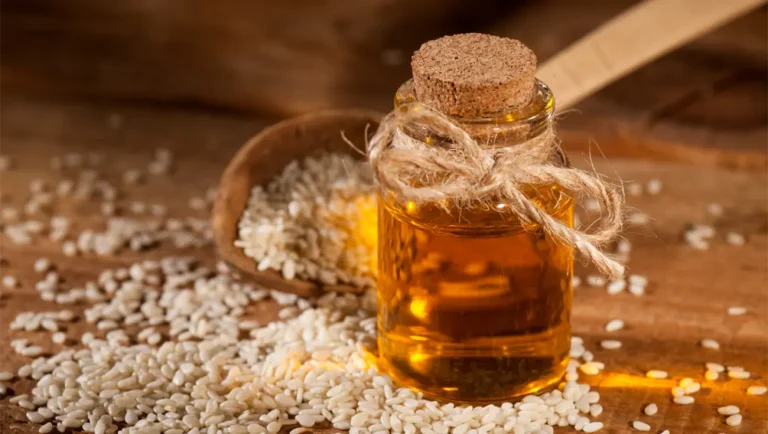
- For an edible oil pressing business, raw material selection is not just a supply issue—it is the foundation of the entire processing strategy. Different oilseeds directly determine the extraction method (cold pressing vs. hot pressing), equipment configuration, production cost, and even final market positioning. For example, oilseeds such as avocado, olive, sesame and walnuts tea seeds are usually better suited for cold or low-temperature pressing, where oil quality, flavor, and nutritional value are the top priorities. But commodities like soybeans, peanuts, rapeseed, rice bran, and sunflower seeds often require hot pressing or solvent extraction to achieve acceptable oil yield and commercial efficiency. With proper filtration or refining systems, hot-pressed oil can also meet commercial and even high-end market standards.
- Another critical step is understanding competitors. Analyzing competitors’ processing methods helps determine whether the market is already saturated with similar products. More importantly, it reveals weaknesses such as unstable oil quality, insufficient filtration, lack of food-grade certifications, or the inability to enter supermarket and institutional supply chains. These insights provide valuable references during the early planning stage and help answer a key question: has the market already been “educated” by one dominant process, or is there room for differentiation?
- Product positioning is not just a marketing decision—it is an engineering decision. Once the target consumer group is defined, the processing method, filtration level, and equipment standards are largely determined. Mass-market edible oil prioritizes clarity, shelf stability, and cost control, which pushes producers toward efficient filtration systems designed for high throughput and continuous operation. High-end or health-focused oils, however, require gentler processing, lower filtration temperatures, and higher precision to preserve nutrients. In this case, filtration equipment becomes a core investment rather than an auxiliary tool.
- Production capacity should not be defined only by how much a factory can produce, but by how much the market can absorb. Overcapacity increases financial pressure, while insufficient capacity limits growth and responsiveness. Therefore, equipment selection must consider not only daily output but also workflow rhythm and sales channels. For example, when customizing GQ-Agri refining equipment, the tank size and functional components are customized according to the oil pressing workshop entrepreneur’s daily production plan and refining depth requirements.
Starting an oil pressing business is far more complex than simply owning land. Success comes from integrating raw materials, processing technology, oil grade, and market positioning into a well-coordinated system.
What are the approximate budget requirements for oil mills of different sizes? We typically categorize them into three sizes:
| Oil Mill Size | Kapasitas Harian | Estimated Initial Investment |
|---|---|---|
| Small Oil Mill | 5–10 tons/day | US$20,000 – US$48,000 |
| Medium Oil Mill | 5–20 tons/day | US$48,000 – US$150,000 |
| Large Oil Mill | 20+ tons/day | US$300,000+ |
But noted: Actual budgets will need to be adjusted based on local land/building costs, labor costs, electricity/energy prices, and the availability of oilseed feedstock.
Have questions about how to set up an oil pressing plant?
Our professional team will help with rational planning.
How much land do I need for a small oil mill?
For a “small oil mill” with low daily output (e.g., less than 10 tons/day), a recommended plant area is approximately 10 m × 6 m × 6 m. If the capacity is between 10 and 50 tons/day, the recommended plant area is approximately 38 m × 13 m × 8 m (processing area) + a wider refining/post-processing area (as needed).
How many workers are required to operate a small oil mill?
When using GQ-Agri oil pressing equipment, a small edible oil refinery (batch-type refinery plant) with a capacity of 1–10 tons/day may only require a few people, 2–3. If the equipment is automated and the process is simplified, even fewer people will be needed. Conversely, more workers will be required.