
Crop Roasting Machine Types and Selection Guide.

I visited dozens of small and medium-sized oil mills in West Africa and Southeast Asia, and one sentence always lingered in my mind: the baking step can make or break the entire hot oil pressing process. Poor roasting often not only impairs flavor and mouthfeel but also prevents the oil from reaching the optimal temperature for full oil release(optimal hot-pressing temperatures vary by crop type). The result is a large amount of unsatisfactory oil, resulting in a loss of economic efficiency. This is the reason why, each time, we remind people about the necessity to select the roasting machine correctly prior to any kind of oil pressing.
Unlike coffee roasters, hot press pretreatment roasting machines are specifically designed for roasting oilseeds and nuts such as peanuts, sesame, and coconut. These oil-pressing raw materials require extremely high temperature control and batch processing. See our guide to hot pressing temperatures for common crops (for reference only). Proper roasting can improve oil yield. The drum roasting machine is one of them that is always a firm favorite owing to its uniform heat distribution and production results. Assuming that you are going to make an upgrade or install your own oil production line, this is the part where your oil yield journey will actually start.

What Types of Roasting Machines Are Used in Oil Production?

I recall one of our clients was a peanut processor in Senegal whose oil mill used hot pressing instead of cold pressing (note the different oil profiles and commercial positioning of hot-pressed and cold-pressed oils). During our discussions, he expressed his frustration with the inconsistent results of traditional roasting. In the past, operators would simply load large quantities of seeds into a basic roasting oven, hoping they would roast evenly. However, this often resulted in under-roasted or burnt seeds, leading to lower oil yield and wasted raw materials. There are numerous roasting machines in the market and not all of them suit the realities of the small and medium size oil mills, particularly those milling peanuts, soybeans, or coconuts. There are machines that cater to the industrial giants or even coffee roasting which is inappropriate to the needs of a farm or a local oil pressing workshop. What counts is finding the roasting equipment to suit crop type, production volume and sources of energy available. When it comes to oilseeds roasting and in specific areas such as Southeast Asia, Africa, and South America, three models of roasting machines keep demonstrating their effectiveness.

Drum Roasting Machine.

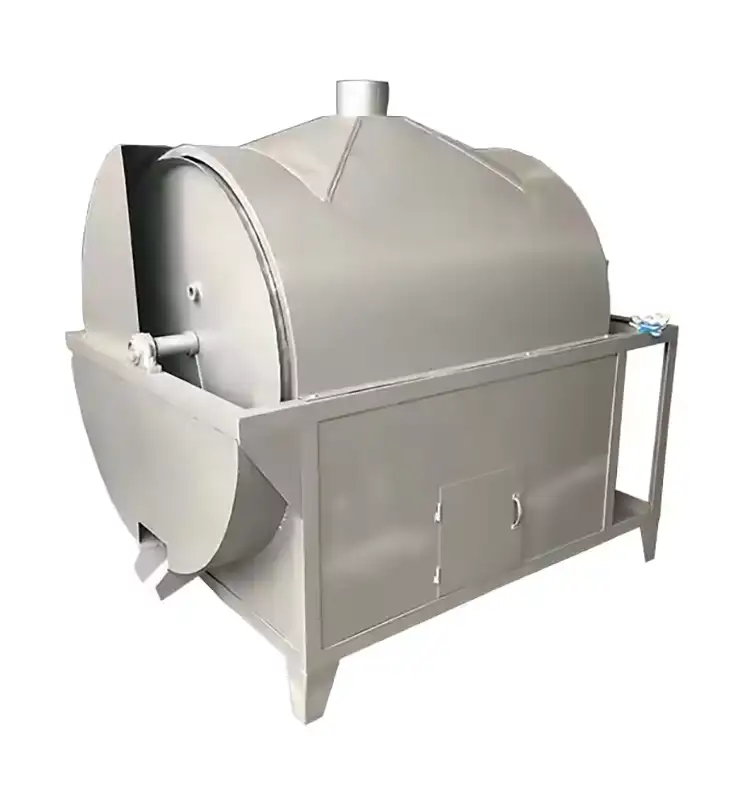
The drum roasting machine has been the main stay of many medium sized oil seed roasting establishments most notably in areas such as Southeast Asia, Africa and South America. It is structured with a big turning drum that keeps turning and flipping oilseeds, like peanuts, sesame, coconuts, soybeans, and sunflower seeds, to make sure that even heat is present over the mixture. This is continuous circulation which eliminates hotspots and minimizes the risk of singeing, which is essential to preserve the integrity of oilseeds during roasting.
The flexibility of the drum roasting machine is put forth by its eligibility to a variety of energy sources such as gas, coal, wood, and electricity. This qualifies it in farms or small oil factories which have diverse fuel supply.
This machine is practical in small to medium-sized production lines since regular functioning significantly influences the edible oil quality and the yield of extraction. The small to medium-sized production line is characterized by its stable roasting phenomenon as well as efficiency. As a versatile oilseed/nut roaster, its durability and flexibility make it a reliable foundation for most small and medium-sized oil mills.

Drum Roasting Machine:

If you’re looking for a workhorse machine that stands the test of time, our drum roasters are your answer. Constructed with food-grade stainless steel and reinforced carbon steel, these units resist corrosion and wear even under continuous commercial operation. I’ve seen these machines run flawlessly for years across diverse oil mills. The rotating drum design ensures every seed and nut—whether peanuts, sesame, sunflower, or walnuts—receives consistent heat exposure.

Hot Air Roaster.

The hot air roaster works in quite a different concept it is a convective heating process where air is moved through the seeds with the help of heated air as opposed to being in direct contact with a heated surface. It is particularly useful with small or fragile seeds such as sesame and castor beans may easily scorch or lose their flavor in direct flames. Hot air roasters are very sensitive farms and quality would not have been maintained without the precise temperature control it enjoys, where chances of over roasting which is critical to the production of high grade oils which can be bought out in the export market, are minimal.
Although the system requires the continuous running of the energy source and tends to utilize more electricity, its eco-friendly nature in the way it operates since there are no direct flames involved and the reduction of emissions compared to other mechanisms makes it a facility that would be desirable especially to facilities that focus on environmental friendliness. It is however dependent on the right batch size being processed as both underloading the chamber or over loading the chamber will decrease roast evenness. Hot air roasters are still popular for coffee bean roasting. Farm oil mills or medium-sized edible oil processing plants generally prefer drum roasting machines because they are more versatile and can accommodate a variety of crops. Simply setting the timer and requiring less technical skills are essential.

Electric Frying Pan Type Roasting Machine.

Most small or medium-sized oil pressing workshop is not necessarily inclined toward the so-called electric frying pan style roasting machine. Although it has a flat or slightly rounded pan and it is electrically heated, its application in day-to-day roasting of oilseeds in the farms is not efficient. Such machines involve greater technicality and dependable power outage, which does not always exist in many small oil mills located in Southeast Asia, Africa, and South America. Small batch size and high concentration of heating makes such a roaster less efficient and less consistent on a large scale or in a continuous process.
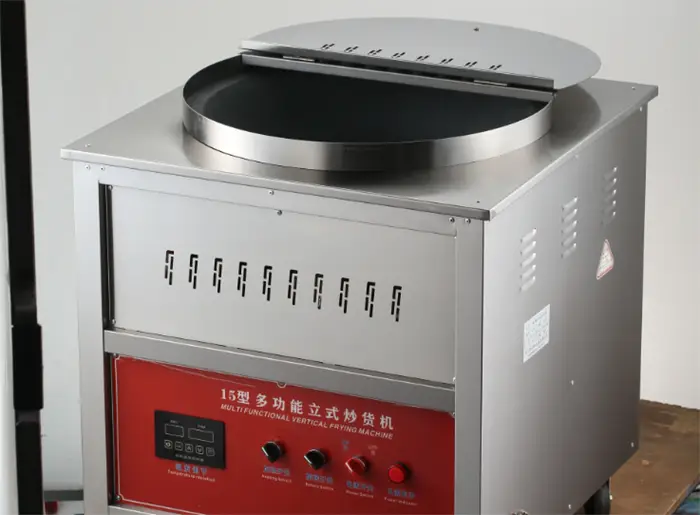
Electric frying pan type roasting machine

Our developed electric roasting machines are, on the contrary, an extension of electromagnetic heating technology of roasting machines of drums. They are electric magnetic drum roasting machines, which have even heating throughout and easy to regulate roasting temperature and time. They are manufactured to fit the requirement of small to medium oilseed processors at low cost and easy to user properties to suit local farm oil mills and processing workshops which do not require highly technical skills to operate and do not consume a lot of capital investment.
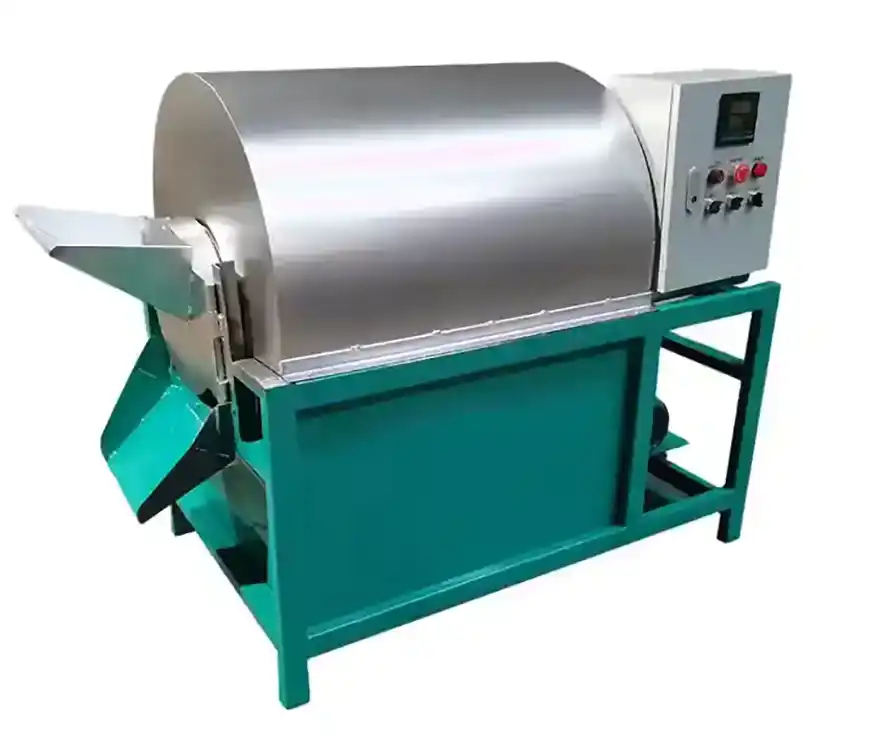
Electromagnetic Heating Roaster:

For operators who demand exact control over their roasting profiles, electromagnetic heating technology changes everything. What I love about these units is the automatic temperature regulation system—no more guesswork or constant monitoring. The electromagnetic arc heating tubes deliver rapid, uniform heat, while the built-in temperature controller lets you dial in precise settings for different materials. Whether you’re roasting delicate seeds requiring gentle heat or robust nuts needing higher temperatures, this flexibility ensures optimal results every batch.

It might be simple to say, but it can make the whole difference! It all begins with the proper choice of the roasting machine that can turn your oilseed processing around. Its drum roasting machine can be used to roast an extensive variety since it roasts energy effectively and efficiently and is also versatile in roasting many diverse oilseeds; the hot air roaster uses high temperatures and is useful with sensitive high-quality conditions. The classic design of electric frying pan, however, fails many small and medium oil mills due to the lack of consistency and scalability. In its place, an electric magnetic type of drum roaster that is practical, flexible solution, and applicable in the farm-scale level of Southeast Asia and Africa is offered. Based on my experience in supporting different oil pressing workshops, it is important to align your preference of roasting machine with the type of crop you make as well as your production capacity in order to enhance output of edible oil and quality.

How to Choose the Right Roasting Machine for Your Oil Press Business?

Even though they are specifics, before you get all into it, you should realize that neither one solution suits every problem. The appropriate roasting machine selection is not a matter of picking the most inexpensive one or the most stylish in terms of the available market. In Nigeria, 500 kilograms of coconuts and peanuts can be processed daily by some of the clients and 300 kilograms per day in a sesame oil workshop in Peru.
These business needs, crop type, yield, and local energy conditions all influence the optimal use of the roaster. It’s a balancing game that lays the foundation for understanding how to match the machine to your specific needs in oil extraction. When making a choice of which roasting machine you want to have in your oil pressing business, take into account the following main dimensions:
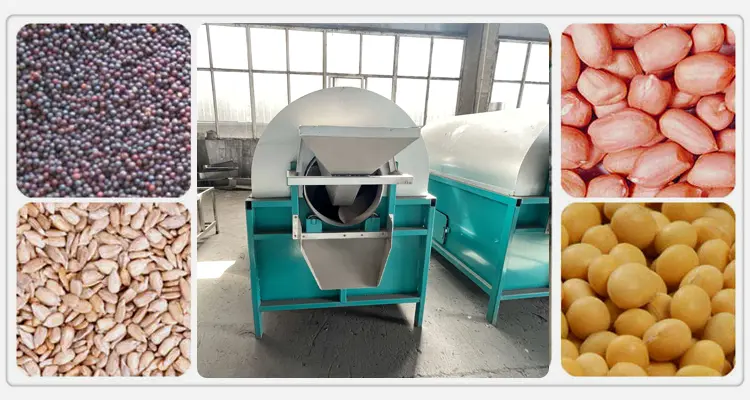
Drum oilseed roasting machine
  • Processing Volume: What roasting machine will fit you is directly related to the scale of your operation. On the other hand, on the scale of family workshops that process less than 200kg daily, smaller and more flexible machines can be applied to be able to control and manage without excessive spending. The oil mills of 200 to 500kg per day should have roasting equipment that runs between capacity and efficiency. The largest roasting lines are often more continuous and used by medium factories having processing capacities in excess of 500kg.
  • Crop Type: Roasting has a different reaction to each oil seed. Drum roasters are the most versatile and can be used for any oilseed or nut with a high oil content or prone to burning, such as peanuts, soybeans, rapeseed, or palm fruit. However, it is important to note that for small seeds or crops that require delicate heating, such as sesame or sunflower seeds, electromagnetic drum roasting machines are preferred, as electromagnetic heat will not burn the delicate flavor components.
  • Energy Source: Depending on where you live, your energy supply may restrict or broaden your options. In places with constant electricity one can think in terms of electric heating which is more than possible in the form of more technologically developed electromagnetic drum roasters. In distant places with environments where power is not strong, coal, wood or gas powered machines are still viable options. Choosing a roasting machine that matches your source of energy means that you will not encounter problems with operations.
  • Investment Budget: The issue of financial capacity is critical in selecting equipment. Entry level, temperature controlled, drum roasting machines are often used by start up companies because of their affordability and control. The bigger factories have more budget to put into large automatic high-output drum roasting lines that increase production and save labor.
FeaturesRecommendation
Processing VolumeFamily workshops: under 200kg/day; Small oil mills: 200–500kg/day; Medium factories: 500kg+
Crop TypeHigh oil content or prone to scorching: prefer drum roasting machine; Small seeds or light roasting: opt for hot air roasters
Energy SourceStable electricity: electric heating; Remote areas: coal, wood, or gas-fired machines
Investment BudgetStartups: entry-level, temperature-controlled drum roasting machine; Medium-sized factories: large automatic continuous drum lines

Adjusting your choice of roasters to take into consideration these parameters, you not only bring efficiency in the roasting process, but also enhance efficiency in hot-pressed oil pressing and oil yield-which is paramount in the production of quality oils such as soybean oil among others prevalent in Southeast Asia, Africa and South America. Knowing the local environment and scale of production can aid smarter investments, and good outcomes in your seeds roasting workflow.
Selecting the right roasting machine was never about the price tags and other flashy capabilities but it was always about finding the machine to fit the actual needs of the working operation. I have had the opportunity to observe the effect that having the choice of a properly selected drum roasting machine has on production both in small factory like workshops and in larger medium sized factories as well, particularly in areas where sources of energy are different and crops differ as well. The importance of matching machine capacity, energy type, and crop specifics are not only prudent but becomes a necessity to get the maximum oil yield and have a smooth process in oil pressing. If you are planning to start your own oil pressing business, I invite you to check out our more detailed description of oil press types and post-pressing filtration systems for vegetable oils.

All the tests, comparisons, and field observations I have carried out over the years make one thing obvious: it is clear that selection of adequate roasting machine before sending off to oil pressing(especially hot-pressed oil) directly influences the product quality as well as profit. In Indonesia, I witnessed some small “workshops” experiencing significant fluctuations in oil production, inconsistent oil quality, and even bitterness due to the inability to control the temperature during manual roasting. Then there are the success stories, scattered all over the world: How a small palm kernel processor in Ghana went to a drum roasting machine, and told me, “We are getting 12 percent more oil out of it now, with half the labor”.
That is the true importance of matching equipment to requirements of growing operations. An appropriately selected drum roasting machine does not only facilitate the seeds roasting to produce a uniform seed, it also implies fewer wastes, burnouts and greater returns in the long run in oil producing. Therefore, GQ Agri does not blindly follow a standard when configuring oil pressing lines for customers. Instead, it comprehensively considers the customer’s location, energy source, and seed type.
This is a case where, when in that crucial point of decision-making, do not guess. Talk to us. We have assisted our customers to cut half the necessary manual work and have an increase of over 10 percent of oil production. Why don t we find something you can afford, manage and maintain with confidence.

Is your hot-pressed oil yield low?

Use an oil seed roasting machine to control oilseed moisture and temperature and increase profits.

FAQ

Of course. Our drum roasters can be used to roast a variety of oilseeds and nuts. However, different oilseeds require different roasting temperatures (click here for a guide to hot oil pressing temperatures for common crops) and durations. Users processing a variety of oilseeds must choose a roaster with adjustable temperatures and timers. These flexible settings can help achieve an acceptable roasting level by avoiding burning and under-processing.

It requires cleaning and regular checking each day so that its performance is stable. A standard Drum roasting machine requires the drum, shaft bearings and heat source of the machine to be checked periodically, particularly in tropical or high-moisture atmospheres. Such residue build up can cause uneven roast or eventual safety issues should it be ignored.

Currently, many models of Roasting machines are now available with flexibility of electric heating. In rural workshops, GQ Agri offers gas, coal, or firewood powered fuel-adapted alternatives. These arrangements will place them in locations such as power blackouts or weak grids. Not only are they practical but also energy efficient enabling farms to cut costs and still maintain a constant roasting output despite minimal structures alike.

Well, according to the properly done roasting of the seeds there can be up to 8% to 12 percent increase in oil yield. Heat dissolves cell division into the oil seed and liberate more tapped oils when being pressed. In hot-pressed oil production, insufficient roasting of the oilseeds can result in a significant loss of high-quality oil. The key is to find the right balance between baking, which is to bake it thoroughly but keep the proper moisture without damaging the quality of the oil.

Roasting is the major contributor to the determination of aroma and shelf stability by edible oil. Right amount of heat elicits nutty, rich tastes and destroys mold spores and dries out foods, thus helping to prevent spoilage. However it is a sensitive operation-over roasting can result in burned tastes or hydrolyzed oil. When properly, it enhances flavor and product quality rendering the oil to be more attractive and preservable during long storage.

en_USEnglish