Hubungi Kami Sekarang


When you start looking at brochures and talking to sales reps, you’ll be hit with a lot of technical specs. It’s easy to get lost. But from my years in the field, I can tell you that it all boils down to a few key areas.
Of all the specs you’ll look at, none are more important than the filling and metering methods. These two things define how the machine works and are directly tied to the type of oil you have.
Filling and Metering Method.
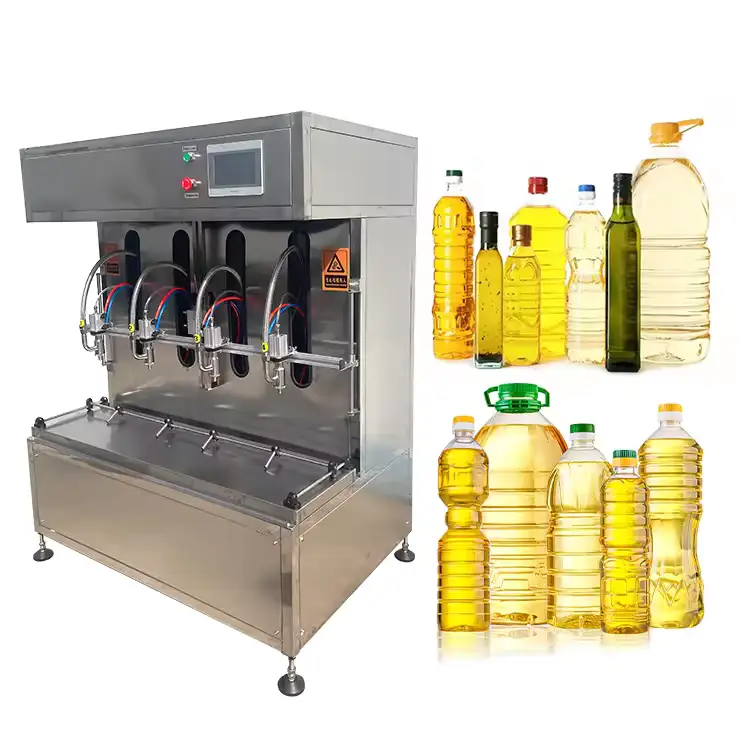
The filling method is the physical mechanism a machine uses to push oil. Such is a simple gravity filler, is for free-flowing, thin oils. In order to handle a machine which has more power and makes thicker products more viscous, a piston or a pump filler got all this oil into the container mechanically. Then there are types of machinery such as overflow fillers that aim to make every bottle reach exactly the same height visually for easy sale.
Now, tied directly to this is the metering method. This is all about accuracy. Most machines use volumetric metering, which installs a certain, fixed amount of oil on each stroke to the pump, much like using a measuring cup. This method has stood the test of time and is in years generic term for its reliability. There is no substitute for net-weight metering when you absolutely have to have the highest accuracy. A net-weight filler uses a precision scale of the highest type to weigh the oil as it fills and cuts off just as soon as target weight is reached. This is especially good for controlling product giveaway, since the density of oil can change with temperature.
Filling Speed.
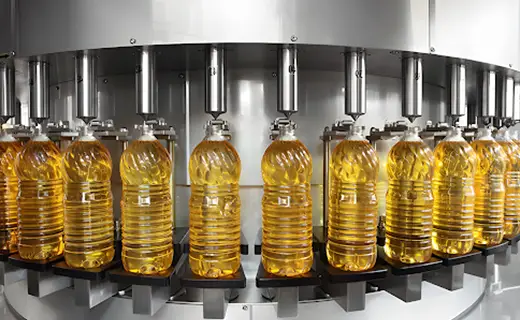
Another thing that is worth mentioning is the filling speed. Pump types, the number of nozzles and the stability of pneumatic components are factors that affect filling speed and price. The type of the pump determines the flow rate of the machine (how much liquid can it pump in a certain time), the number of nozzles means how many containers the machine can fill at once, stable pneumatic components ensure consistent, fast, and repeatable movement, minimizing breakdowns and errors. Pair this with a well-adjusted filling system that matches your bottle’s height and neck diameter, and you’ll have a setup that’s both durable and perfectly compatible with your packaging line.
We’ll only briefly touch on this here. If you are interested in truly understanding the differences between pump types such as piston pumps and gear pumps for filling machines, and to see which one is right for you, I’ve put together a more detailed guide you can find here: [Main Types of Oil Filling Machines]
Accuracy.
Accuracy often requires a trade-off with speed. You might see two liquid filling machines on the market that both have a filling capacity of 500 bottles per hour, but their prices differ by several thousand dollars. The reason lies in the filling accuracy. To achieve stricter filling accuracy, there are strict requirements for important components in the filling machine, such as the pump structure, PLC control program, and filling nozzles.
Equipment Component Materials.
What’s the right machine without the right materials? When it comes to oil filling or packaging machines, the material determines the quality and safety. A reliable machine should always be made from food-grade stainless steel, the same type widely used in food and pharmaceutical equipment. Stainless steel offers strength, hygiene, and easy cleaning — all essential for maintaining product purity during production.
During the production process, we ensure that all surfaces of parts that come into contact with the product meet stringent food contact standards, thereby protecting the quality of our customers’ products and their business reputation. If the liquid being filled has a high salt or acid content, we can also upgrade to 316 stainless steel upon request, as ordinary stainless steel may corrode over time.
Container Compatibility.
As we all know, the shape and size of filling containers vary depending on the product design. These might include rectangular bottles, round bottles, tin cans, large-capacity containers, etc. Therefore, the filling machine’s conveyor belt, filling volume, and filling program need to be compatible with these containers. In large-scale industrial fully automated filling machines, the machines are customized based on container models in the early stages of production and cannot be compatible with containers of other sizes. For small and medium-sized enterprises, our fully automatic filling machines can be pre-programmed with data for various common container sizes, allowing customers to switch or adjust at any time. However, please note that because the hardware components of the filling equipment are fixed, the adjustment range of the filling machine is limited, and changes in container style cannot exceed the adjustable range.
Now that your machine is built right and fully compatible with your bottles and oil, let’s talk about what takes it from good to great. These components below add more features that separate a good machine from a great one, especially on high-end equipment.
- A solid control system, usually a PLC with a touchscreen interface, lets you easily adjust fill volumes and speeds and save “recipes” for different products.
- Anti-drip devices. They solve the messy and wasteful problem of stray drops on your bottles and conveyor after a fill cycle, often using specialized nozzles.
- For certain oils or daily chemical products that are prone to foaming under pressure, anti-foaming functionality is also crucial. This is typically achieved through nozzles that fill from the bottom up or a vacuum filling system, minimizing splashing.
- Finally, an automatic cleaning system, often called a ‘Clean-in-Place’ (CIP) system, can be a lifesaver. It automates the washing and sanitizing process, which saves an enormous amount of time and ensures your machine is hygienically clean between batches.
-

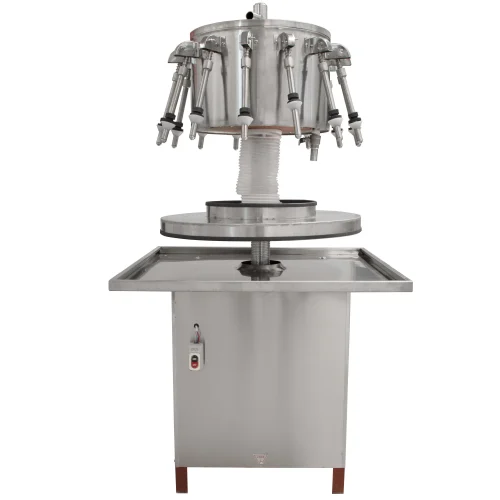
Semi-automatic 12/14/18 rotary siphon liquid quantitative gravity filling machine
-
Automatic rotary vacuum negative pressure filler for wine, juice, beverages, and water
-
Semi-automatic single-head servo-operated gear pump liquid filling machine
-
Commercial simple small automatic desktop quantitative liquid paste filling machine
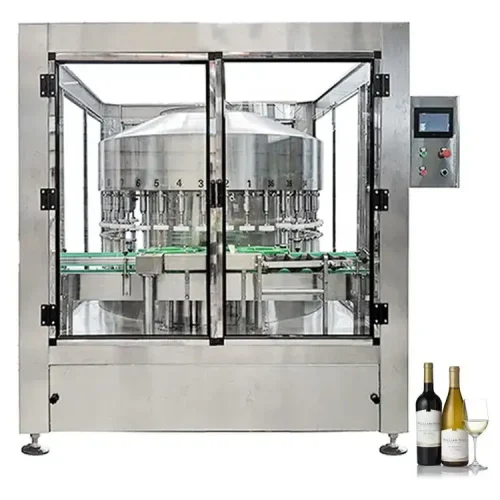
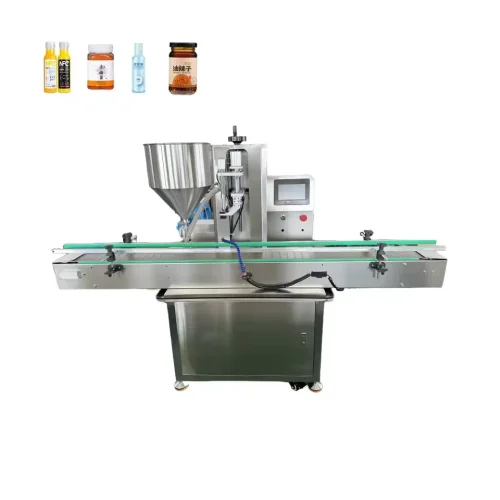
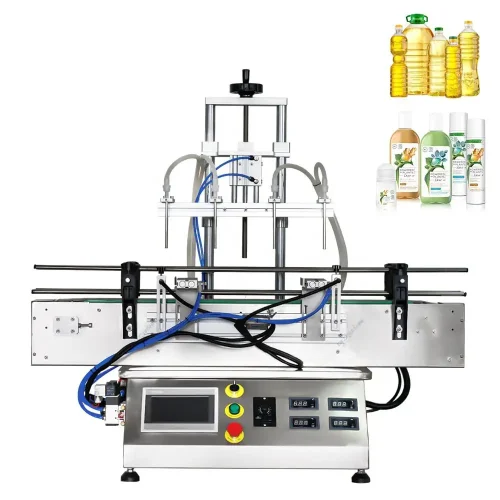
We’ve covered the “what”, the specific features to look for on a machine. Now let’s talk about the “how.” How can you turn your business plan into reality with the right filling machine?
I once worked with a new producer, let’s call him James. He was launching a premium line of thick, unfiltered sesame oil. He found a great deal on a used gravity filler, thinking he’d saved a fortune. The reality was a nightmare. The machine was designed for thin oils and couldn’t handle the viscosity. Fills were slow, wildly inaccurate, and the pump motor overheated constantly. He ended up scrapping it and losing months of time.
His story is a perfect reminder that choosing the right machine isn’t about finding the cheapest option. It’s about a systematic process of matching the machine’s capabilities to your operational reality.
So, how do you avoid a mistake like that? You need to answer a series of questions, and you have to be brutally honest with yourself.
- Oil Viscosity.
Let’s start with the oil itself. The first thing you have to get right is the oil’s viscosity. This is just a technical term for its thickness. Is it thin and free-flowing like a light salad oil (around 50-100 centipoise, or cP), or is it thick like a cold-pressed peanut oil (which can be over 1,000 cP)? This is the single most important factor. A simple gravity filler works for low-viscosity oils, but a high-viscosity oil will require the mechanical power of a piston or pump-style filler to move it accurately. - Packaging Capacity.
Next, think about your packaging. What is your single-batch filling capacity? Are you filling small 250ml bottles or large 5L jugs? For smaller bottles (typically anything under 1L), a volumetric piston filler with high accuracy is a very common and cost-effective choice. But once you get into larger containers (10L to 50L), a high pressure, high flow rate filler becomes a much better option. It’s more accurate for bulk quantities and isn’t affected by density changes. - Production Goals.
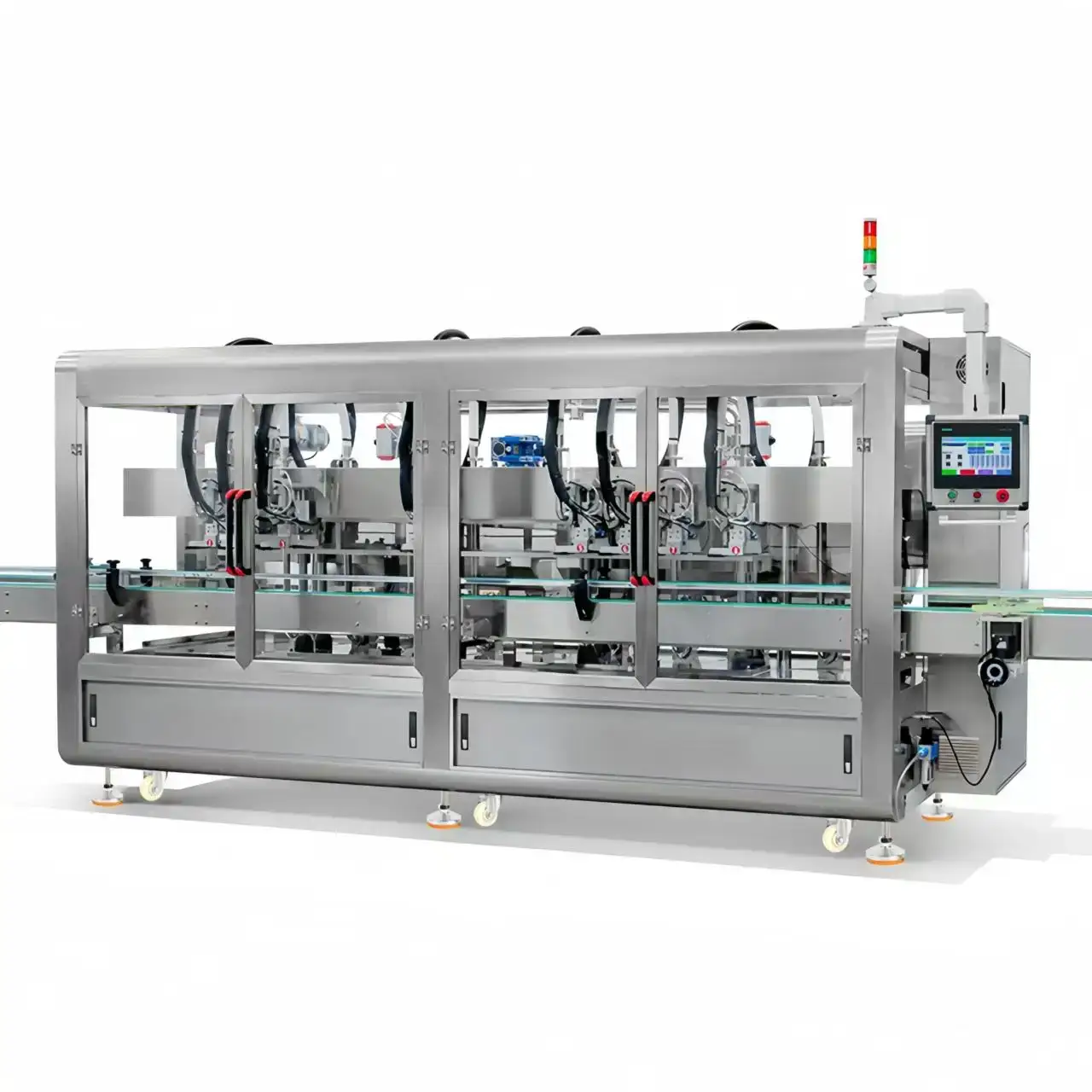
Now, let’s zoom out to your production goals. What is your target daily production capacity? This isn’t just a random number; it should be based on your sales forecasts. Work backwards. If you need to produce 8,000 bottles a day to meet orders, you can calculate the machine speed you need. A basic formula I use is: Bottles per Hour = (Total Daily Bottles) / (Work Hours × Efficiency). Assuming an 8-hour shift and a typical efficiency of 85% (accounting for breaks and changeovers), you’d need a machine capable of filling around 1,200 bottles per hour. This simple math tells you if you need a semi-automatic machine (often in the 100-200 units/hour range) or something much faster. For example, a small workshop that only fills about 500–1,000 bottles per day can use a semi-automatic piston filler. But a factory aiming for 8,000–10,000 bottles daily will need a multi-head automatic filling line with a conveyor and capping unit to keep up with the schedule. - Automation Level.
This naturally leads to your automation level. A semi-automatic machine, where an operator manually places bottles and may handle capping, is perfect for startups. They have a low initial cost and are flexible for small batches. A fully automatic line, which handles everything from unscrambling empty bottles to capping and labeling, is built for scale. The trade-off is simple: you’re swapping labor costs for a much higher upfront capital investment. For instance, if you’re a new brand producing 300 bottles of essential oil per day, a semi-automatic tabletop filler might be ideal—you save space and cost while staying flexible. But if you’re a large cooking oil producer filling 10L containers for supermarkets, you’ll want a fully automated high-flow filling and capping line to maintain speed and consistency. - Power Requirements.
Before you get too far, you have to consider the practical limits of your facility. What are your power requirements? A small, semi-automatic machine might run perfectly on a standard 220V single-phase outlet, which is the same type most workshops already use for everyday appliances. However, once you move up to a medium-sized automatic line, it will almost certainly require a 380V three-phase connection to handle multiple filling heads, conveyor motors, and air compressors.
For example, a small producer filling 500 bottles of coconut oil per day can operate easily with a single-phase setup. But if your daily capacity target reaches several thousand bottles, the machine’s motors and control systems will demand more stable, high-load power—something only a three-phase line can deliver. At the industrial scale, high-speed production lines or integrated packaging systems may even require a dedicated high-voltage power supply with independent circuit protection to prevent voltage drops or safety risks. - Space Conditions.
The same level of attention applies to your site layout. Do you physically have the space to accommodate your chosen equipment? A simple filling station or semi-automatic setup can often fit into a small workshop corner, requiring maybe 5–10 square meters. But once you move toward a fully automated filling and labeling line, the space demand increases dramatically—not only for the machines themselves but also for bottle conveyors, labeling stations, and operator access paths.
As a rule of thumb, you’ll need at least 80 square meters for a basic packaging room, with a minimum of 60cm of clearance around each side of the equipment for safe operation and maintenance. If you plan to expand production later, it’s wise to reserve extra room for future add-ons like bottle unscramblers or batch coding machines. - Budget.
Finally, we have to talk about the budget. A small, semi-automatic piston filler might cost a few thousand dollars. A complete, fully automatic, high-speed production line from a top-tier European brand like Krones could be well over a million. Be realistic about what you can afford, but also consider the hidden costs. A cheaper machine might have higher maintenance costs or lower efficiency, costing you more in the long run. Upgrading from a small, semi-automatic machine to a complete production line typically increases tenfold in price. Therefore, plan your investment based on your actual filling needs.
This is one area where you absolutely cannot cut corners. Getting the right certifications and meeting industry standards isn’t just about making a good product; it’s about protecting your customers, your brand, and your business from legal trouble.
So, what are the non-negotiables? It really boils down to two main areas: the physical design of the machine and the official regulations it must meet.
First, let’s talk about hygienic design. This is the foundation of food safety. It all begins with the metal itself. Any surface that touches your oil must be made from food-grade stainless steel. You’ll see two main types: AISI-304 is the industry workhorse and is perfect for most oils. If you’re working with anything that’s more acidic or corrosive, you’ll need to upgrade to AISI-316 or 316L for better resistance. But the right material is useless if it’s not finished correctly. All food-contact surfaces must be perfectly smooth and non-porous. Think about it this way: any tiny crack, crevice, or bad weld is a hiding place for bacteria. A well-designed machine is also easy to clean, with parts that can be quickly taken apart or with an automated Clean-in-Place (CIP) system that runs cleaning cycles for you. Good designs are also self-draining, so no liquid can pool and become a problem area.
Next, you have the official regulations and certifications. These can feel a bit like alphabet soup, but they’re incredibly important. The baseline for everyone is following Good Manufacturing Practices (GMP). On top of that, you have more specific standards. In the United States, your equipment must be compliant with the Food Safety Modernization Act (FSMA). When it comes to the actual engineering, there are two gold-standard organizations to look for: EHEDG (the European Hygienic Engineering and Design Group) and 3-A Sanitary Standards in the US. A machine that is certified by one of these groups has been verified to meet the highest levels of hygienic design.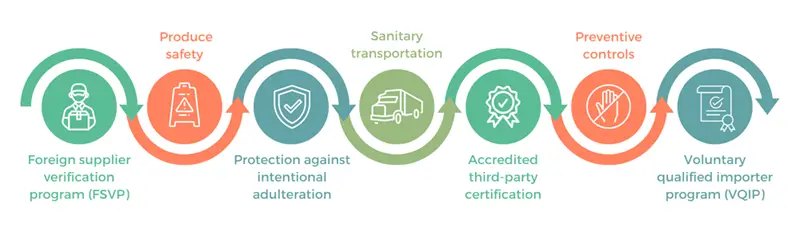
Finally, remember that safety isn’t just about the food. The machine must also be safe for your team to operate. This means proper guards on all moving parts and secure electrical systems that meet standards from groups like the Health and Safety Executive (HSE). It’s all part of a complete safety-first approach. Here at GQ Agri, we can provide you machines and devices that fully comply these regulations with optimal performance.

 Indonesian
  English
  Malay
Malay  Swahili
  Vietnamese
  Arabic