
Contact Us Now


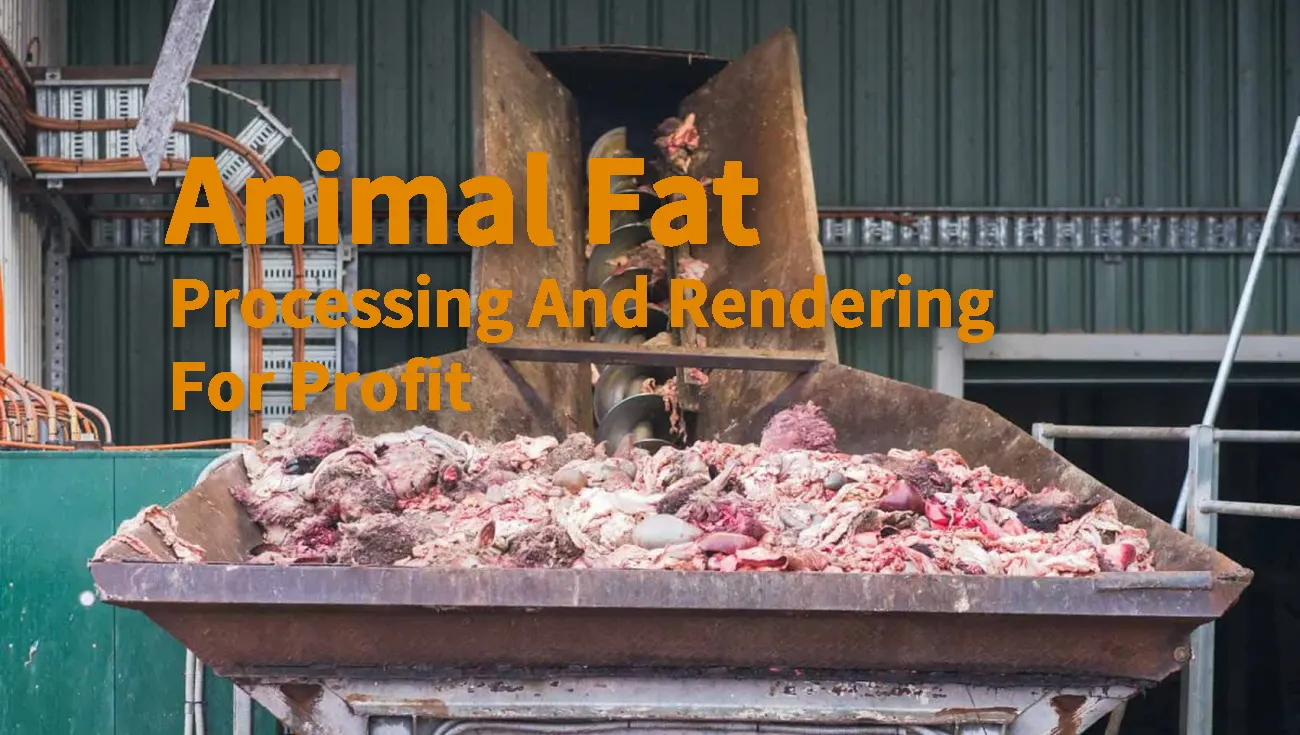
When people ask me what rendering is, many still picture an open pot, heavy smell and someone stirring until it “looks done”. In a serious animal fat processing plant, that picture is not just outdated, it is a direct hit on yield, quality and compliance. I usually explain it in a simpler and more accurate way. You take animal fats such as beef tallow or pork fat, heat them slowly and evenly so that pure liquid fat separates cleanly from water, protein and connective tissue, then you can capture that fat and keep it stable. Done properly, the same process turns what used to be a disposal cost into a reusable resource that can re enter the value chain instead of going to landfill.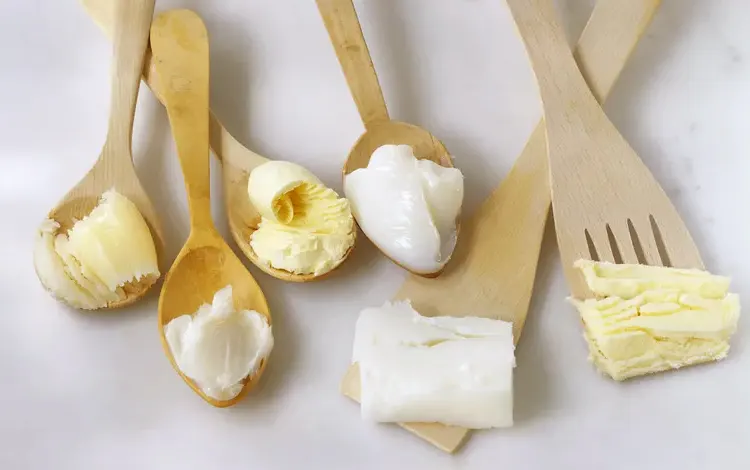
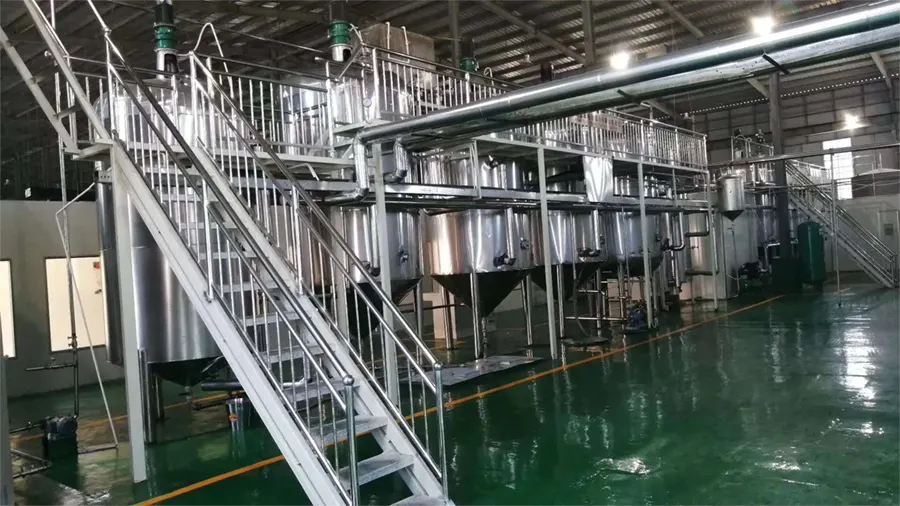
On the plant floor this is never a single pot. Our latest environmentally friendly animal fat extraction solution is as follows:
- Fresh trimmings, fat, offal and bones are collected and sent through a grinder so the pieces are a consistent size. If you skip this, the outer layers burn while the centre stays raw, free fatty acids climb, dark specks appear and the oil colour goes too deep.
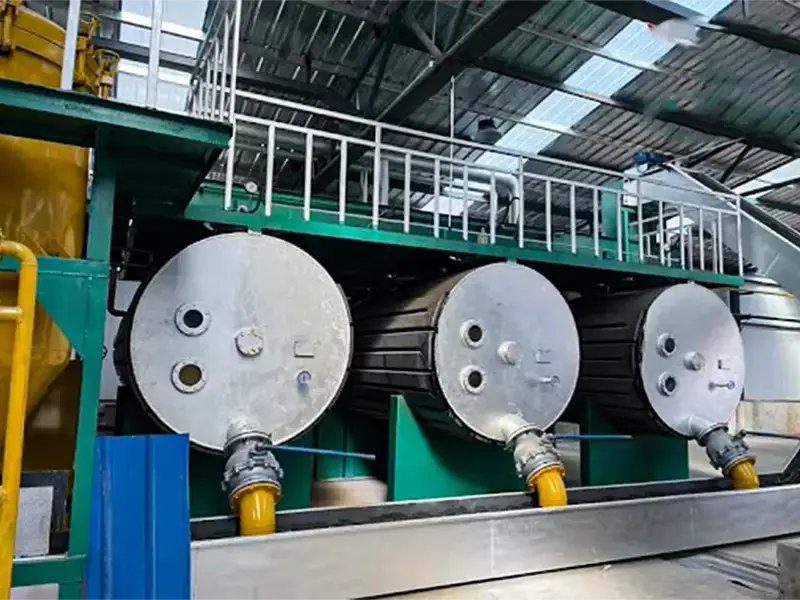
- From the grinder, a conveyor feeds the material into a temperature controlled vacuum rendering kettle or continuous cooker. Under slight negative pressure, moisture leaves at a lower temperature, vapours go into a condenser instead of the yard and the heat reaches the core of each particle instead of just the surface. But don’ worry, a good cooker does several jobs at once. It shortens rendering time, protects natural colour, keeps the acid value of the liquid fat down and prevents the carbonised edges that make later refining harder and more expensive.
- Once the fat cells have opened, you are no longer dealing with “waste”. You have a hot mix of liquid fat, water and softened solids that can either stay a problem or become two separate products. Coarser pieces move over an oil residue scraper conveyor into a screw oil press, which squeezes out the last usable fat and leaves a much drier cake for feed or further processing. This combined stream of crude fat and fine particles then passes through a residue filter so small solids do not damage pumps, tanks or heat exchangers.
At that point you already hold a crude animal oil that can go to industrial or feed markets and a protein rich solid instead of a wet and rotting mass. Plants that aim at edible, oleochemical or biofuel markets send this cleaned crude oil into full refining and sometimes dewaxing. In practice, the quality of your rendering section decides which of those markets you can really enter, so reliable and efficient cooking and separation equipment is not a luxury, it is a good foundation of the business.
When we design or upgrade a rendering line, I rarely start with a flow chart. And I start with a very simple question. On a normal day, which animals are you handling, and which parts of those animals are actually ending up in the cooker? Species and fat depot decide yield, oil behaviour and which markets you can realistically serve, so it is worth being very concrete here.
| Species | Main fat sources | Characteristics | Fit in the market |
|---|---|---|---|
| Pigs | Backfat, belly fat, leaf (kidney) fat, trimming fat | Medium melting point, fairly neutral flavour | Lard for food and pastry, feed, industrial use, biofuel |
| Cattle | Subcutaneous fat, intermuscular fat, kidney and organ fat | High melting point, firm texture, stronger flavour | Tallow for frying, food, soap, oleochemicals, industry |
| Sheep/goats | External fat, internal depots around organs | High melting point, pronounced flavour | Regional foods, specialty fats, soaps, some technical use |
| Poultry | Abdominal fat pads, skin with attached fat, trimmings | Low melting point, fluid at cool temperatures | Pet food coatings, high-energy feeds, some food uses |
| Fish/marine | Whole small fish, viscera, heads, frames, skin | High in polyunsaturated fatty acids, oxidises faster | Human nutrition, aquafeed, specialty oils, biofuel, Health products |
| Camel | Hump fat, internal and subcutaneous fat | Dense, waxy fat, higher melting point, distinct aroma | Niche food uses, traditional remedies, personal care and high-end leather or artefact care |
| Mixed streams | DAF skimmings, trap grease, mixed plant fat | Mixed quality, variable composition | Technical fats, soaps, industrial uses, biofuel |
- In pig plants you usually work with 3 main depots. Backfat and belly fat under the skin, the soft leaf fat around the kidneys and trimming fat from cutting lines. Clean, well chilled backfat and leaf fat are the base for higher grade lard. Once skin, hair or a lot of connective tissue are mixed in, the same fat still renders well, but it pushes the oil toward feed, industrial or fuel outlets.
On site I often suggest something very simple that many plants skip, that is to separate bins or at least separate batches for “lard grade” fat and low-grade trimmings. That one habit lets you produce two distinct products instead of one average one that never quite fits any premium buyer.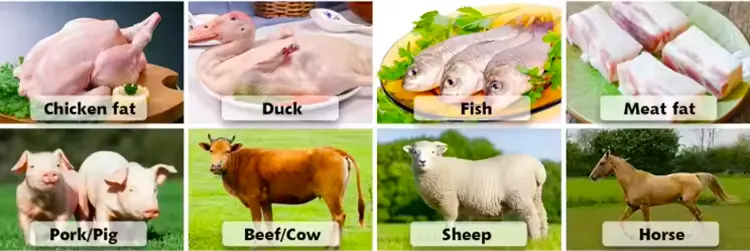
Raw materials that can be used to extract animal fats - Beef and dairy cattle give you a different profile. Subcutaneous fat, intermuscular seams and internal fat around kidneys and intestines render into beef tallow with a much higher melting point than lard. That firmness means you have to think about tank heating, pipe insulation and line design, especially in cold climates, otherwise you end up with solid tallow sitting in dead legs and pump inlets. And the clean kidney fat kept separate and cold can support edible tallow markets; but the mixed trimmings with gristle and contamination are better directed into technical tallow where colour and flavour demands are lower. From an equipment point of view, it often makes sense to design storage with at least one “edible grade” tank and one “technical grade” tank, even if both draw from the same cooker.
- Sheep and goats contribute smaller volumes but can open or close very specific niches depending on how you handle them. External fat and internal depots behave much like beef fat in the cooker, but the flavour is stronger and more characteristic. In regions where mutton and lamb are everyday foods, rendered sheep fat has a very clear role in traditional dishes and local soap production. And in the export-oriented plants it is more common to see it blended into general tallow. If your primary source of oil is sheep or goat fat, it’s worth considering whether building a separate production line for “sheep fat” makes sense, because once it’s mixed with other oils, you lose the option of selling this specialty sheep fat.
- Poultry fat needs special attention because of how quickly it can degrade. The main sources are abdominal fat pads, skin with attached fat, trimming fat from cut-up and deboning and residual fat on viscera and necks. Rendered poultry fat stays fluid at lower temperatures and carries a strong aroma that pet food manufacturers and some feed formulators actively want. The downside is that warm and fatty poultry by-products oxidise and pick up off-odours much faster than chilled beef or pork trimmings. In some plants with heavy poultry flows, I insist on short holding times, effective chilling and tight oxygen control before and after rendering. The same softness that makes the fat attractive as a coating oil will turn into rancidity complaints if storage and handling are treated casually.
- Fish and other marine animals are in their own category. Fatty species such as the anchovy, herring, mackerel, sardine and salmon provide oil from whole small fish or from viscera, heads, frames and skin on larger fish. These oils are rich in polyunsaturated fatty acids, especially omega-3s, which is exactly why they are valued in human nutrition and aquafeed, and exactly why they are more sensitive to heat and air. In practice this means fish rendering lines run at lower, tightly controlled temperatures, with fast separation, rapid cooling and usually antioxidant dosing and inert gas on higher value streams. If you push fish material through a generic high-temperature rendering regime designed for beef or pork, you will still get oil, but much more of it will be only suitable for technical uses or fuel instead of the higher value nutrition markets you probably had in mind.
- Camel fat deserves a separate note if you work with Middle Eastern or North African markets. The hump holds a dense and waxy fat with a higher melting point and a very recognisable aroma profile, so it behaves differently from regular tallow or lard. Also, the rendered camel oil from the hump is often kept as a segregated stream and sold into niche channels. Some customers use it as a base for traditional balms and care products, others integrate it into skin and hair care formulas, and a smaller group supply luxury and artefact-care products where camel oil is used to condition leather or crafted pieces. From a process point of view it is still animal fat, but the value comes from handling it cleanly, managing temperature carefully and preserving the “camel” identity instead of blending it away into a generic oil.
Across all of these species and depots, the pattern is straightforward that the more clearly you sort by animal and by fat type at the start, the more precisely you can position the resulting oil at the end. From a line design point of view, that often means planning separate reception bins, clear labelling, and, where justified, separate storage or even separate cooking campaigns for edible-grade and technical-grade fats. It is much easier to protect value with a few doors, pipes and procedures than to try to “polish” a poorly defined fat later with extra refining and still convince demanding buyers that it belongs in their product.
When someone asks whether animal fat rendering really pays, I do not answer with a “it depends”. To comprehensively consider profits, one must first start with three aspects: the cost of raw materials, processing costs, and how to convert different animal fats and oils into different grades of finished liquid oils, rather than a single mixture.
A sensible starting point is the gap between the product value and processing cost. Market data for tallow, lard and similar rendered fats in recent years often shows export or benchmark prices in about the 900-1,400 USD per ton band for crude and refined grades, with tighter specs and certain regions going higher. Some industry cost studies for modern rendering plants, including work commissioned by Meat & Livestock Australia and others, usually put total rendering costs in the low hundreds of dollars per ton of finished output, with energy and labour as the main drivers. The processing plant is trying to seize this market opportunity through good production line design and strict operation. If you find yourself paying for raw fat at levels close to finished oil benchmarks, you can already see where margin is disappearing.
Liquid oils.
Mass balance is the next lever. Industry references often quote an overall approximation for mixed raw animal material of about 60% water, 20% protein and minerals and 20% fat when all category-3 by-products are thrown into one stream. In many real projects that is not what reaches the cooker. Slaughterhouses have already taken out the lean, high-value cuts, and what is sent to rendering is dominated by fat depots. Pork backfat, for example, can contain on the order of 80% fat on a mass basis with comparatively little water. In practical terms, a ton of well-sorted fat trimmings can realistically yield something in the 400-600 kg range of saleable oil once moisture and solids are accounted for, sometimes more when you work with very clean backfat or leaf fat. The exact yield still depends on how the line is engineered, the animal species, the specific fat depots and the freshness and cleanliness of the raw material.
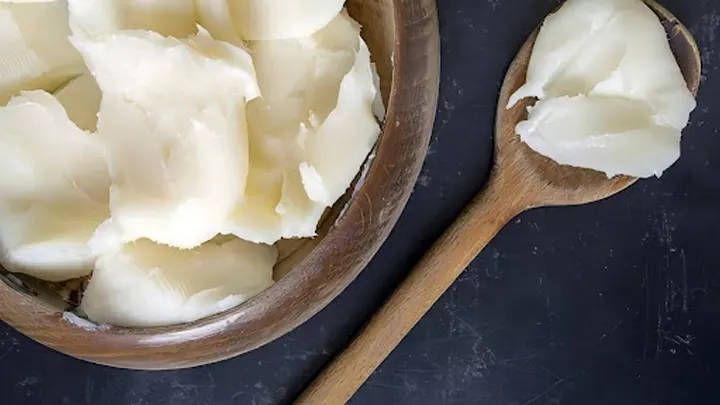
Losses inside the process are where a lot of hidden money sits. Poor particle size control, hot spots in the cooker or weak pressing can easily leave 10-20% of potential fat locked in greaves. On site I often pull a sample of press cake with my clients, test residual fat and then multiply that number by yearly throughput and current fat prices. It is common to see six-figure annual losses hiding in what everyone casually calls “waste”. Our GQ-Agri layouts are built around this point, to get more fat out of the same ton and keep the crude oil clean enough to move into higher value markets.
To make the numbers less abstract, it helps to walk through a simple case. One client, David, runs a mid-size plant handling about 20,000 tons per year of high-fat pig and beef trimmings with an average fat content of about 50%. That feedstock therefore carries about 10,000 tons of fat on paper. A basic line that, because of cooking and separation losses, effectively recovers only 45% of the incoming mass as saleable oil ends up with about 9,000 tons per year and leaves around 1,000 tons spread through greaves and sludge. A tuned line with vacuum rendering, effective pressing and proper separation can move that recovery closer to the 50% theoretical yield and capture most of that difference. Even if the “extra” 1,000 tons are only sold as crude industrial fat at 900 USD per ton, that is 900,000 USD of additional revenue before tax and overhead. If part of that stream can be refined and sold closer to current tallow or lard benchmarks in the 1,100-1,400 USD per ton band, the uplift per ton becomes much stronger.
Oil Residue & Oil Meal.
The pressed oil residue is a secondary source of income, not a side effect. Meat and bone meal, poultry meal and other rendered meals regularly trade in the low-tomid-hundreds of dollars per ton, depending on protein content, ash and freight. Some recent USDA feedstuff reports, for example, show ruminant meat and bone meal in the United States offered broadly in the 250-350 USD per ton range, with blood meals and higher-protein specialties priced significantly higher. On the same 20,000 tons of raw material, the solids you dry and mill each year can represent a substantial slice of turnover once you map real prices. Plants that manage moisture, contamination and grind size earn the upper end of that range; plants that treat meal as “whatever comes out of the dryer” are pushed into discounted fuel or low-grade feed categories. From an equipment perspective, controlled drying, proper milling and decent meal handling are not cosmetic upgrades, they are part of the margin structure.
The real step change usually comes from segmentation rather than pure volume. Many operators start with one generic “animal fat” and then slowly learn to split streams by species and specification.
- Tallow that meets edible or bleachable fancy grades moves into frying oils, food ingredients and oleochemicals.
- Lard supports baking and processed foods.
- Poultry fat finds its natural place in pet food coatings and high-energy feeds, where buyers are used to reading guaranteed analyses for minimum fat, moisture and maximum impurities.
- Fish oil, when rendered gently and protected from oxidation, can reach higher price levels in aquafeed and some nutrition markets than commodity tallow.
A line that only produces a dark, high-acid mixed fat is effectively tied to technical and fuel buyers at the bottom of the price curve. But a line with adequate refining, deacidification and, where needed, dewaxing can take the same raw materials and place them into several well-defined markets at different price tiers.
Biofuel demand has also shifted the floor under all of this. Analyses of U.S. and European renewable diesel and biodiesel feedstock use show animal fats, yellow grease and other recycled lipids supplying a large share of total input, with animal-derived and recycled fats together contributing about 40-50% of feedstock in some recent years. And that pull from energy markets has lifted prices for inedible tallow and greases and made quality-consistent supply more valuable. It is an opportunity if your oil meets the water, impurity and free fatty acid thresholds that fuel producers write into their contracts; and it is a headache if each load struggles in pretreatment because of sloppy rendering or storage. On projects where biofuel supply is a clear goal, we build those needs into the rendering and primary cleaning design from day one, not as an afterthought.
All of this is why I always put numbers and equipment in the same conversation. And the modern integrated lines like those we build at GQ-Agri, with vacuum kettles, residue presses, proper filtration and refining modules, exist to make those scenarios real.
 English
  Indonesian
  Malay
Malay  Swahili
  Vietnamese
  Arabic