
Liên hệ với chúng tôi ngay


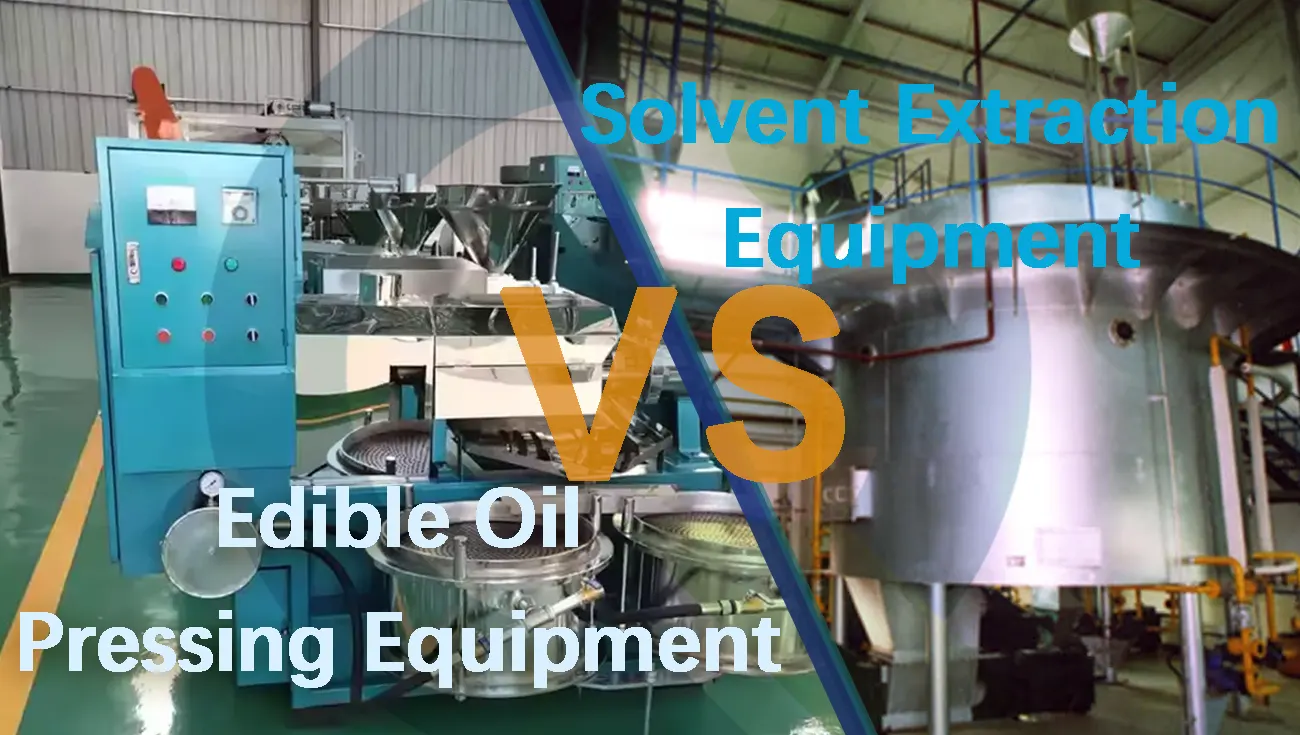
Ask anyone who’s ever worked around oil mills, and they’ll tell you there are really only two ways to get oil out of seeds: mechanical pressing and solvent extraction. Everything else is just a variation of those two ideas. The choice between them shapes not just your yield, but your plant layout, cost, and even how customers think about your product.
Put simply, a solvent-based process depends on chemicals like hexane to dissolve oil from seed flakes, delivering high extraction efficiency at industrial scale. Mechanical pressing does the same job by force rather than chemistry. The oil comes out under pressure – no solvents, fewer controls, and a cleaner footprint. That straightforward setup is what many smaller or high-end producers prefer.
| Method Category | Core Principle | Typical Use Case |
|---|---|---|
| Solvent-Based Extraction | Using a chemical solvent to dissolve oil from pretreated seed material | Industrial scaling, high yield operations |
| Mechanical / Physical Pressing | Applying mechanical force (pressure or friction) to squeeze oil out | Small-to-medium scale, premium/clean label oils |
Both work, but they reflect very different ways of thinking. One trusts chemistry to do the heavy lifting; and the other depends on precision machines and patience.
Solvent-Based Extraction (Leaching / Chemical Extraction).
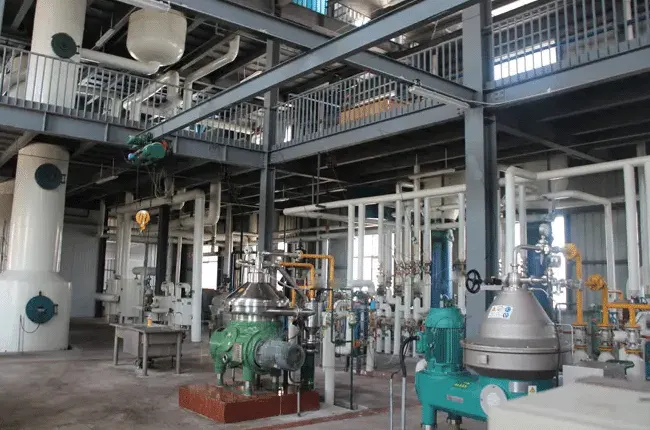
In big edible oil factories, solvent extraction is the backbone process. Seeds are first flaked or crushed to open their cells, then soaked or percolated with a solvent, most often hexane, that dissolves the oil. The liquid mixture, known as miscella, goes through heating and condensation stages so the solvent can evaporate, be recovered, and reused. What’s left behind is crude oil ready for refining.
When done right, the recovery rate is excellent. You can get the residual oil in the meal down to below 1 %, which adds up fast when you’re processing hundreds of tons a day. That’s the main reason solvent plants dominate large operations.
But there’s a flip side. These systems are so complicated: solvent recovery towers, desolventizers, emission control and strict safety measures all come into play. Even trace residues must meet food-grade limits and keeping the process stable demands skilled operators. Add the energy bills and it’s very easy to see why only large plants can justify the investment.
A practical middle ground some companies use is pre-pressing before extraction. The press removes a portion of the oil and the solvent system finishes the rest, so that you can save some energy and reduce solvent load without losing much yield – a common compromise in mid-size setups.
Mechanical / Physical Pressing.
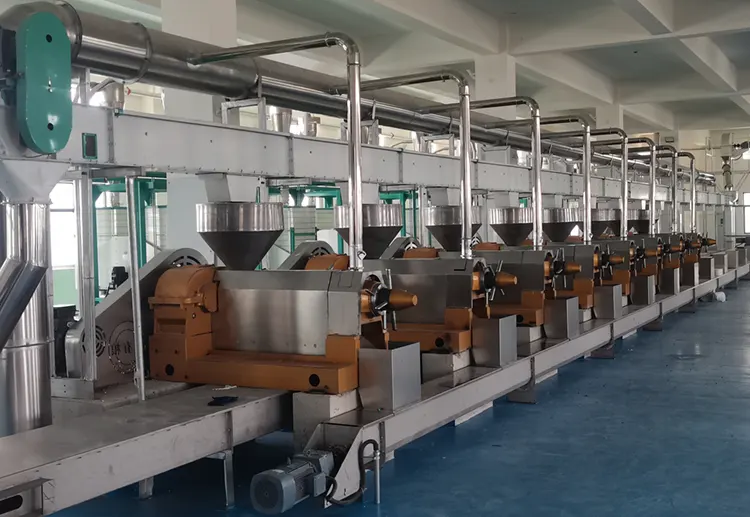
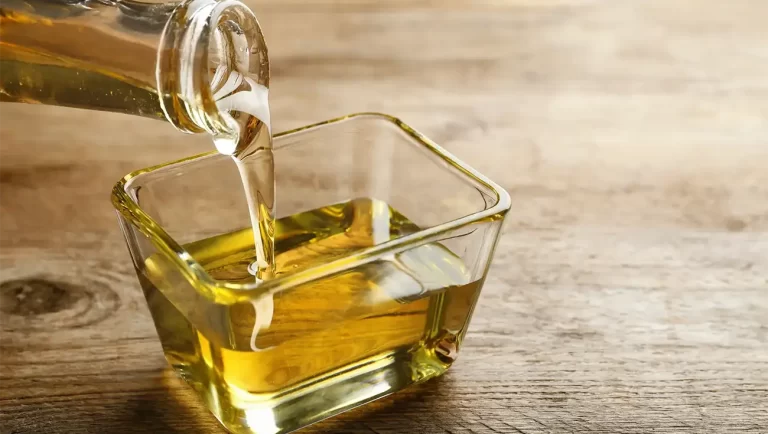
Now, let’s talk about another way. Mechanical pressing is the straightforward and hands-on approach that’s been around forever. You feed pretreated seeds into a screw or hydraulic press, apply pressure, and watch the oil flow out. No solvents, no chemical recovery, no explosion-proof rooms, just physics.
For smaller producers or premium brands, this route makes a lot of sense. It’s safer and easier to control, and fits perfectly with “natural,” “cold-pressed,” or “solvent-free” labels. The setup costs less and maintenance can often be done by the team on site. About the trade-off? You’ll leave a few percent of oil in the cake, usually around 3 – 5 %. Still, for many, that’s a fair price for a cleaner process and better-tasting oil.
With good equipment design, like GQ-Agri’s precision screw and hydraulic press systems, you can fine-tune pressure and temperature so the oil keeps its aroma, antioxidants and bright color. It’s not just about yield, and it’s about producing an oil you’re proud to bottle.
Based on my industry experience over the past decade, I’ve compiled a simplified comparison to help you make a decision:
| Tính năng | Solvent Extraction | Mechanical Pressing |
|---|---|---|
| Oil Residual in Cake | Very low (<1 %) | Higher (few % to 3–5 %) |
| Complexity & CAPEX | Cao | Moderate to low |
| Operational Risk / Safety | Higher (flammable solvents, emissions) | Lower |
| Suitability | Large-scale or medium scale | Small to medium, specialty producers |
| Oil Quality (flavor or aroma) | Needs refining, possible degradation | More natural preservation |
Choosing between these two methods isn’t just about getting the most oil out. It’s about what kind of business you want to run. Solvent extraction is unbeatable for sheer volume, but it ties you to bigger budgets, stricter permits or more oversight. Mechanical pressing may leave a bit of oil behind, but it gives you control, simplicity and a cleaner story to tell your customers, and that’s where GQ-Agri’s integrated pressing systems are designed to help.
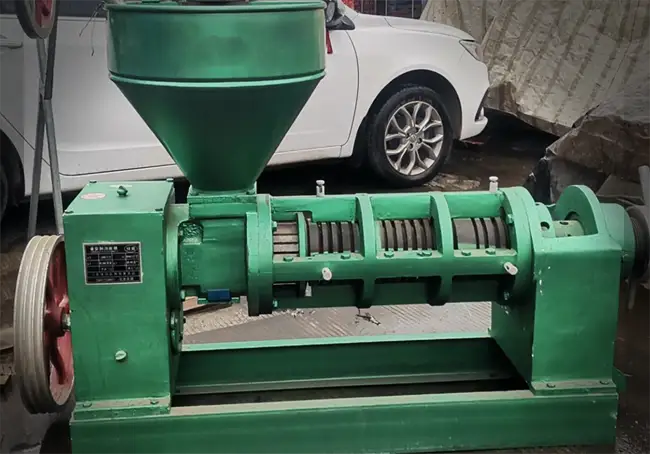
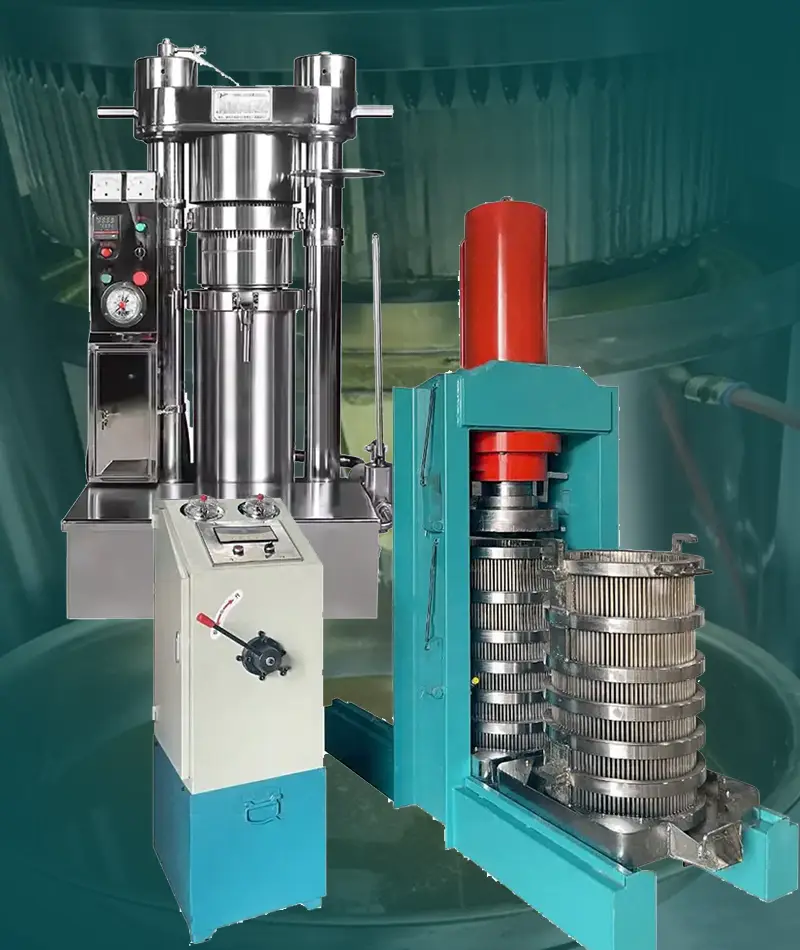
Hydraulic pressing works unlike continuous screw. You load the meal or cake into molds or chambers, then apply static high pressure. Because there’s minimal internal motion, friction is reduced and heating is much less. This gentler pressing method helps preserve the natural aroma, color, and heat-sensitive nutrients (such as vitamins, phytosterols, and mono/polyunsaturated fatty acids) of crops, especially in high-end product lines.
That said, hydraulic presses inherently operate in cycles (like the “load → press → drain → unload”). That limits throughput. If your plant must handle tens or hundreds of tons a day, hydraulic may become a bottleneck unless you deploy many machines or large chambers. Our hydraulic oil presses feature precision-sealed, reliable hydraulic components and easy maintenance. This prevents seal failure or leakage that could compromise the integrity of the pressing pressure. In high-margin or boutique oils where flavor and purity matter, hydraulic presses often become the tool of choice for small batches or finishing lines.
When helping clients design or advise on oil pressing equipment, our sales representatives don’t use rigid checklists. They first consider the client’s daily output, business positioning, the plant’s daily operations, and the company’s equipment needs for the next few years. Furthermore, the layout of the production facility always allows for flexibility, such as space, piping, and utilities, to accommodate future upgrades or additions.
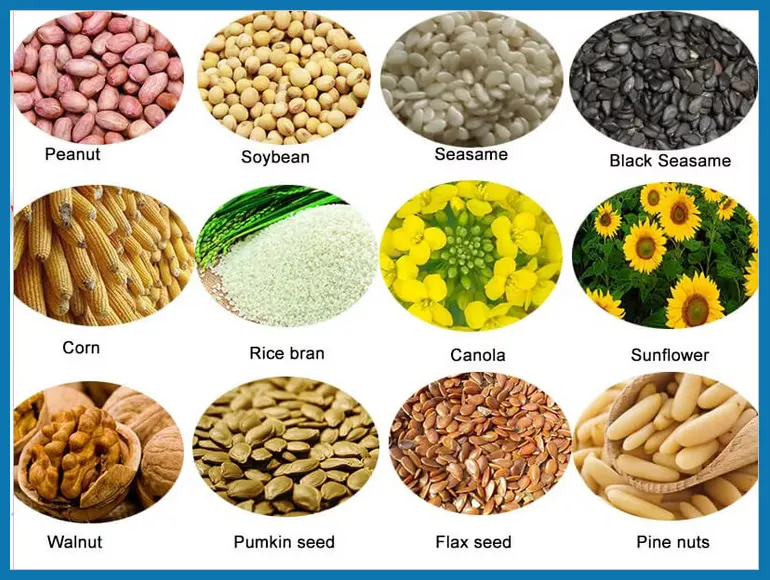
I often tell clients, “Use a high-performance screw press for your main output; reserve the hydraulic press for your high-quality virgin oil production line.” This way, you can achieve both efficiency and superior quality within the same plant.
 Vietnamese
  English
  Indonesian
  Malay
Malay  Swahili
  Arabic